
If you have recently had Microblading, you may be wondering whether the touch-up is really necessary.

The short answer is: yes, the first touch-up is an important part of the Microblading process.

Your skin does not always hold pigment evenly after the first appointment. Some strokes may heal lighter, some areas may retain more pigment, and the final shape may need small refinements.

A touch-up is not simply a repeat of the first appointment.

It is the moment when the artist can see how your skin actually healed and make careful adjustments based on the healed result.

What Is a Microblading Touch-Up?

A Microblading touch-up is a follow-up appointment after the initial healing period.

During the first appointment, the artist creates the eyebrow shape and hair-stroke pattern.

Then the skin heals.

During healing, some pigment may soften or fade more in certain areas.

At the touch-up, the artist can evaluate:

  • pigment retention;
  • lighter areas;
  • stroke definition;
  • density;
  • shape;
  • symmetry;
  • color;
  • small details that may need refinement.

The goal is not to start over.

The goal is to improve the healed result.

Why Does Microblading Need a Touch-Up?

Every person’s skin heals differently.

Even two people with similar skin types can retain pigment in different ways.

Some common reasons for a touch-up include:

  • a few strokes healed lighter;
  • one area retained less pigment;
  • the brow front needs to look softer;
  • the tail needs a little more definition;
  • the density needs a small adjustment;
  • the color needs a small refinement.

This does not automatically mean the first appointment was unsuccessful.

Uneven or lighter areas can simply be part of the normal healing process. Several touch-up guides from other PMU studios also explain that the first healed result gives the artist important information about how the client’s skin retained pigment. 

When Is the First Microblading Touch-Up?

At Seven Sky Beauty, the first Microblading touch-up can be performed from four weeks after the initial appointment.

By this time, the first healing period has passed and the brows can be evaluated more accurately.

It is important not to judge the final result too early.

During healing, the brows may look darker, then lighter, then softer.

The true healed result becomes easier to evaluate after the skin has had time to recover. 

What Happens During the Touch-Up?

During the appointment, I first look carefully at the healed brows.

I check:

  • which strokes stayed clearly visible;
  • which areas healed lighter;
  • whether the density is balanced;
  • whether the color looks correct;
  • whether the shape still looks natural;
  • whether small refinements are needed.

Then I work only where needed.

This is important because the touch-up should be based on the healed result, not simply repeat the entire first session.

Can the Shape Be Changed at the Touch-Up?

Small adjustments are often possible.

For example, during the touch-up we may be able to:

  • add a little more density;
  • slightly extend the tail;
  • reinforce some strokes;
  • soften or balance certain areas;
  • refine small details.

However, the touch-up is not the best time for a completely different eyebrow design.

Large changes may require a different plan, especially if the existing pigment is already visible.

Can the Color Be Adjusted at the Touch-Up?

Yes, small color adjustments may be possible.

After the first healing period, the artist can see how the pigment settled in the skin.

If the healed color looks lighter, cooler or warmer than expected, the artist may be able to refine the color during the touch-up.

This is one of the reasons the healed result is so important.

Fresh Microblading does not always show the final color accurately.

What If My Brows Look Patchy Before the Touch-Up?

Do not panic.

Patchy-looking areas can happen during healing.

Some strokes may appear lighter or temporarily disappear during the healing process.

This does not always mean the pigment is gone.

The skin can go through a “ghosting” stage where the pigment looks much lighter before becoming more visible again. 

That is why it is important to wait until the brows have healed before deciding what needs to be corrected.

What If One Brow Heals Differently From the Other?

This can happen.

The two sides of the face are not identical.

Differences in:

  • skin texture;
  • oil production;
  • sleeping position;
  • natural brow hair;
  • healing response;

can affect how each side heals.

The touch-up allows the artist to rebalance the final result after seeing how both brows healed.

Is the Touch-Up the Same as an Annual Refresh?

No.

This is an important difference.

First Touch-Up

The first touch-up happens after the initial healing period.

At Seven Sky Beauty, it can be performed from four weeks after the first appointment.

Its purpose is to refine the original Microblading result.

Annual Touch-Up

After the first treatment and touch-up are complete, I generally recommend an annual touch-up once a year.

This is used to refresh faded pigment and maintain the shape and definition of the brows.

The annual touch-up is about maintenance.

The first touch-up is about completing and refining the initial result.

Why Do Annual Touch-Ups Matter?

Microblading gradually fades over time.

Sun exposure, skincare, skin type and lifestyle can all affect how quickly the pigment becomes lighter.

An annual touch-up can help:

  • refresh faded color;
  • bring back definition;
  • maintain the shape;
  • keep the brows looking fresh;
  • reduce the need for daily eyebrow makeup.

Some clinics recommend annual or 12–18 month color boosts, depending on the client and the level of fading. 

At Seven Sky Beauty, I generally recommend checking the brows around the one-year mark.

Can You Touch Up Microblading Too Often?

Yes.

This is something many articles do not explain enough.

More touch-ups are not always better.

If pigment is added too often, the brow can become too saturated.

Over time, individual strokes may begin to look less clear or merge together.

Too much repeated work can also create unnecessary stress on the skin.

A good artist should first evaluate how much pigment is still visible before deciding whether more work is needed. Some experienced PMU educators specifically warn against refreshing too often because of pigment build-up and loss of stroke definition. 

What If My Old Microblading Is Still Very Dark?

If the old pigment is still dark or saturated, adding more Microblading may not be the best choice.

The artist needs to evaluate:

  • how much pigment is still present;
  • the current color;
  • the old shape;
  • whether clean new strokes can still be seen;
  • whether another technique may work better.

Sometimes it is better to wait for more fading.

In other cases, correction, Powder Brows or removal may need to be discussed.

What If I Wait Too Long for an Annual Touch-Up?

If the brows fade a lot, the appointment may become more like a new session than a simple refresh.

The artist may need to rebuild more of the shape or add more pigment than during a regular annual touch-up.

That is why regular maintenance can sometimes be easier than waiting until most of the pigment has disappeared.

Does Skin Type Affect Touch-Up Needs?

Yes.

Skin type can affect pigment retention.

For example:

  • very oily skin may fade faster;
  • dry skin may retain fine strokes differently;
  • textured skin may soften the appearance of strokes;
  • mature skin may need a different approach;
  • sun-damaged skin can affect healed results.

This is why touch-up needs are different from one person to another.

Do You Need the Same Aftercare After the Touch-Up?

Yes.

After the touch-up, the skin goes through another healing period.

You should follow the same aftercare instructions again.

The brows may look darker at first, then lighter, and then softer as they heal.

Do not judge the final result immediately after the touch-up.

What Should You Avoid Before Your Touch-Up?

Before your appointment, avoid doing anything that can irritate the brow area.

If your skin is sunburned, irritated or damaged, the appointment may need to be delayed.

Always tell your artist if:

  • you started new skincare;
  • you had a recent skin treatment;
  • you have irritation in the brow area;
  • you have new medical concerns.

A healthy skin surface is important for good healing.

What Should You Bring to Your Touch-Up?

You usually do not need to bring much.

But if you have photos of your brows right after the first appointment, they can sometimes be helpful.

They can show how the color and shape changed during healing.

The most important thing is to come with clean skin and no brow makeup.

Frequently Asked Questions About Microblading Touch-Ups

Is a Microblading touch-up really necessary?

Yes, in most cases it is an important part of the process.

It allows the artist to evaluate the healed result and refine lighter or uneven areas.

When can I get my first touch-up?

At Seven Sky Beauty, the first touch-up can be performed from four weeks after the first appointment.

What if my brows look too light before the touch-up?

This can happen during healing.

Wait until the brows have fully settled before judging the result.

Can I make my brows a little fuller at the touch-up?

Yes, small adjustments to density and shape may be possible.

Is an annual touch-up necessary?

I generally recommend an annual touch-up once a year to refresh the color and maintain the brows.

Can too many touch-ups damage the result?

Yes.

Refreshing too often can cause pigment build-up and reduce the appearance of clean individual strokes.

What if I have old Microblading from another artist?

The existing pigment should be evaluated first.

If it is too dark or saturated, adding more strokes may not be the best option.

Why the Touch-Up Is Part of a Good Microblading Result

A beautiful Microblading result is not only about the first appointment.

The healing process shows how your skin responds to the pigment.

The touch-up gives the artist a chance to see the healed result and make careful adjustments.

At Seven Sky Beauty, I do not simply repeat the first session.

I evaluate the brows and work only where refinement is needed.

After the first treatment and touch-up, I generally recommend an annual touch-up once a year to help maintain the shape, color and definition.

Considering Microblading or due for a touch-up? Book a consultation at Seven Sky Beauty to have your brows evaluated.
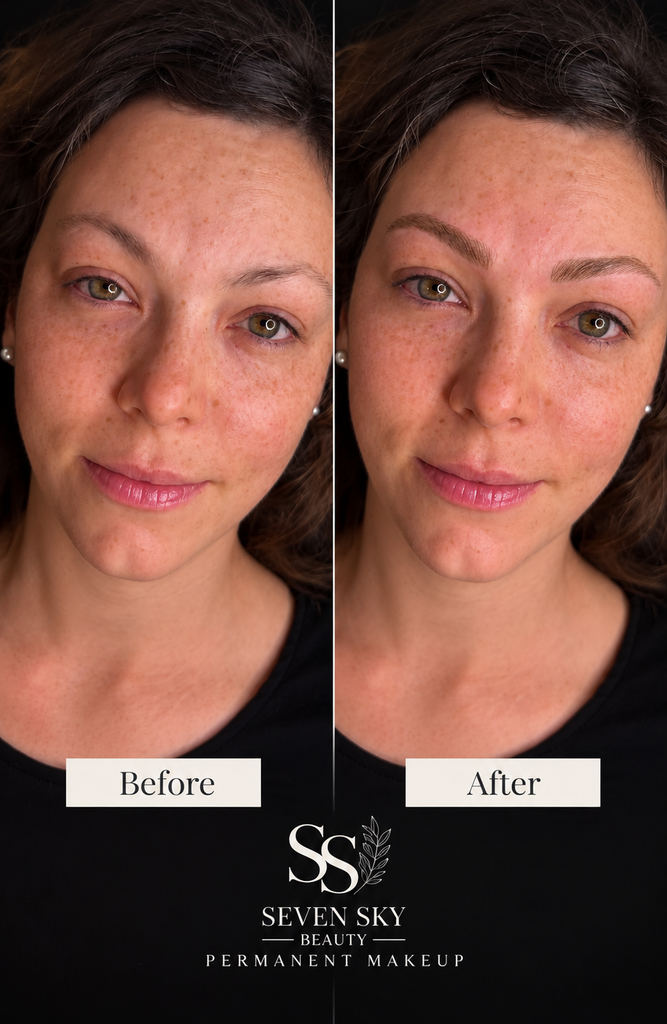
Microblading touch-up result with natural healed eyebrow hair strokes

Microblading – Eyebrows microblading, lip blush, eyeliner, in montreal
Microblading for Mature Skin: Is It a Good Choice?

How to Choose the Best Microblading Artist: 7 Things to Look For – Eyebrows microblading, lip blush, eyeliner, in montreal
How Long Does Microblading Last? – Eyebrows microblading, lip blush, eyeliner, in montreal
Nano Brows vs Microblading: Which Technique Is Right for You? – Eyebrows microblading, lip blush, eyeliner, in montreal
If you are considering Lip Blush, one of the most common questions is:

What does the Lip Blush healing process actually look like?

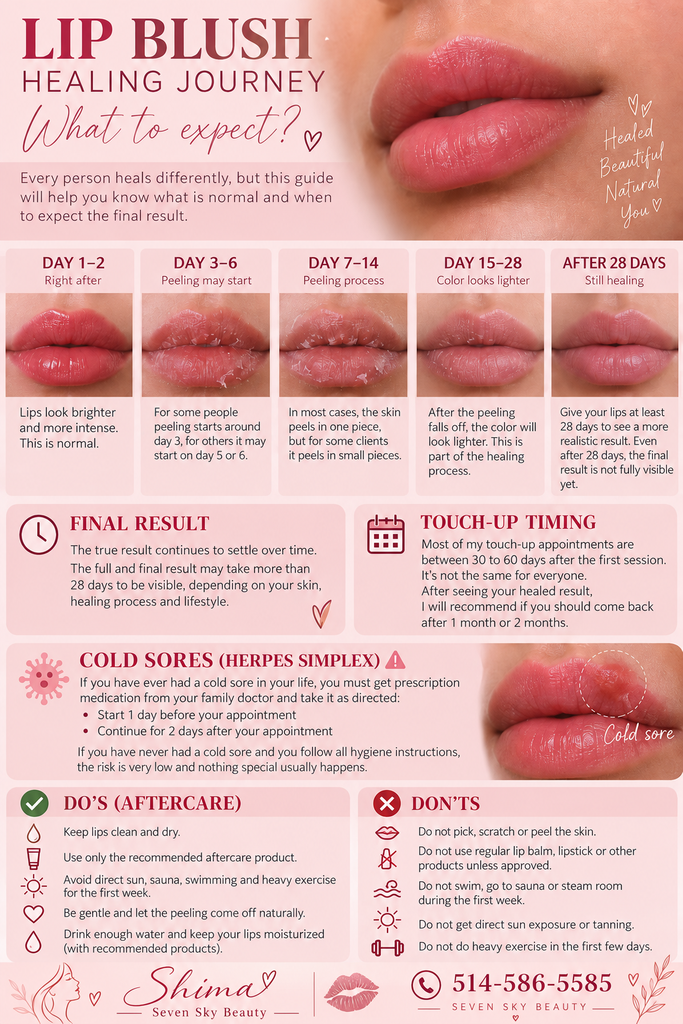
Lip Blush can look very bright and intense immediately after the procedure, but this is not the final result.

During healing, the lips can look darker, slightly swollen, dry, flaky and then much lighter before the color begins to settle.

Every person heals differently.

At Seven Sky Beauty, I give each client clear aftercare instructions because good healing is an important part of getting a beautiful final result.

What Happens Immediately After Lip Blush?

Right after Lip Blush, the lips usually look:

  • brighter;
  • darker;
  • more defined;
  • slightly fuller because of swelling.

The amount of swelling can be different from one person to another.

Some clients have very little swelling.

Others may have more swelling depending on their skin, lip structure and whether they already have lip filler.

Clients with larger or heavily filled lips may sometimes notice more swelling after the procedure.

This usually begins to improve naturally.

How Should You Clean Your Lips After Lip Blush?

At Seven Sky Beauty, I ask clients to gently clean the lips with water and a clean damp cotton pad.

The lips should not be rubbed.

Instead, gently dab the surface.

This helps remove the clear fluid that may come to the surface after the treatment.

If this fluid dries on the lips, it can make the skin feel tighter and drier.

Very dry lips can crack more easily when smiling, talking or opening the mouth.

That is why gentle cleaning is important.

How Often Should You Clean the Lips?

Day 1

On the first day, clean the lips gently about every two hours.

Use water and a clean damp cotton pad.

Do not rub.

Just dab gently.

Day 2 and Day 3

On the second and third day, cleaning about five to six times during the day is usually enough.

Again, use a clean damp cotton pad and water.

The goal is to keep the surface clean without irritating the skin.

What Should You Avoid After Lip Blush?

During the first days, avoid things that can irritate the healing lips.

At Seven Sky Beauty, I ask clients to avoid:

  • licking the lips;
  • touching the lips unnecessarily;
  • picking or peeling the skin;
  • spicy food;
  • hot food;
  • hot tea;
  • coffee;
  • soft drinks;
  • products that may irritate the lips.

Be careful when brushing your teeth.

Try not to get toothpaste directly on the healing lips.

Toothpaste is not dangerous, but fresh Lip Blush skin can be very sensitive and toothpaste can cause a strong burning sensation.

When Does Peeling Start?

There is no exact day for everyone.

For some clients, peeling can start around Day 3.

For others, it may not start until Day 5 or Day 6.

The way the skin peels can also be different.

Many of my clients have skin that comes off in larger pieces.

Other clients may have smaller flakes.

Both can be normal.

The most important thing is:

Do not pull, scratch or remove the peeling skin.

Let it fall off naturally.

What Happens After the Peeling?

After the peeling is finished, the lips usually look much lighter.

This stage can surprise clients.

The color may seem too soft or even much lighter than expected.

This does not mean the pigment has disappeared.

The color continues to settle under the skin.

This is why it is important not to judge the final result too early.

When Can You See the Real Lip Blush Result?

I tell my clients to give their lips at least 28 days before making a judgment about the result.

By this time, the color is usually much easier to evaluate.

However, even after 28 days, the final result may still continue to develop.

For some clients, the color continues to settle after one month.

That is why I do not recommend the exact same touch-up timing for every person.

When Is the Lip Blush Touch-Up?

At Seven Sky Beauty, Lip Blush touch-ups are usually scheduled between 30 and 60 days after the first appointment.

The exact timing depends on the healed result.

For some clients, I may recommend coming back after one month.

For others, I may recommend waiting closer to two months.

I prefer to evaluate the way the lips heal before deciding the best touch-up timing.

Why Is the Touch-Up Timing Different for Everyone?

Every client heals differently.

The final result can be influenced by:

  • skin type;
  • lip texture;
  • pigment retention;
  • swelling;
  • lip filler;
  • lifestyle;
  • aftercare;
  • natural healing response.

Some lips settle faster.

Others need more time.

That is why the touch-up should be based on the healed result, not just the calendar.

What Happens During the Touch-Up?

During the touch-up, we can evaluate:

  • areas that healed lighter;
  • pigment retention;
  • color balance;
  • lip border;
  • overall shape;
  • small details that need refinement.

The goal is to perfect the result after seeing how your lips healed.

Is Swelling Normal After Lip Blush?

Yes, mild swelling is normal.

The amount can be different for every client.

Some clients have very little swelling.

Some have more.

Clients with lip filler may sometimes notice more swelling.

The important thing is that the swelling should gradually improve.

Can Lip Filler Affect Swelling?

Yes.

Clients with larger amounts of lip filler may experience more swelling after Lip Blush.

This does not automatically mean there is a problem.

The tissue may simply react more strongly.

This is one reason why it is important to tell your artist about previous lip filler before the appointment.

What About Cold Sores?

This is very important.

If you have ever had a cold sore in your life, even one time, tell your artist before your appointment.

At Seven Sky Beauty, I advise clients with a history of cold sores to speak with their family doctor about prescription antiviral medication.

The medication is typically started one day before the appointment and continued for two days after, according to the doctor’s instructions.

If you have never had a cold sore, good hygiene and aftercare are still important.

Any medication plan should always come from a healthcare professional.

What Is Normal During Lip Blush Healing?

The following can be normal:

  • swelling;
  • darker color immediately after treatment;
  • dry lips;
  • peeling;
  • flaking;
  • color looking lighter after peeling;
  • uneven-looking color during healing;
  • gradual color return.

The timing can be different for every person.

When Should You Be Concerned?

Normal healing can include swelling, dryness and peeling.

But if symptoms become severe or continue to worsen, contact an appropriate healthcare professional.

Seek medical advice if you notice:

  • severe swelling;
  • increasing pain;
  • unusual discharge;
  • spreading redness;
  • signs of infection;
  • symptoms that do not improve.

Lip Blush Healing Timeline

Day 1

The lips look brighter and darker.

Some swelling is normal.

Clean gently every two hours with water and a clean damp cotton pad.

Avoid rubbing.

Days 2–3

The color may still look strong.

The lips may feel dry.

Clean about five to six times during the day.

For some clients, peeling may begin around Day 3.

Days 4–6

For many clients, peeling becomes more noticeable.

Some people peel in larger pieces.

Others have small flakes.

Do not pick.

Days 7–14

Most of the visible peeling is usually finished.

The lips may look much lighter.

The pigment is still settling.

Days 15–28

The color begins to look softer and more natural.

The lips continue to heal.

Do not judge the final result too early.

After 28 Days

The result is much easier to evaluate.

However, the full final result can continue to settle.

Touch-up timing is decided based on the healed result.

Common Mistakes During Lip Blush Healing

Picking the Skin

Do not remove the flakes.

Let them fall off naturally.

Licking the Lips

Licking can irritate the area and interfere with healing.

Eating Hot or Spicy Food Too Soon

These can cause irritation and discomfort.

Getting Toothpaste on the Lips

Fresh Lip Blush skin can burn strongly if toothpaste touches it.

Judging the Color Too Early

The color can look very light after peeling.

Wait at least 28 days.

Frequently Asked Questions About Lip Blush Healing

How long does Lip Blush take to heal?

The visible healing happens during the first several days, but the pigment continues to settle for several weeks.

I recommend waiting at least 28 days before judging the result.

When does Lip Blush start peeling?

It depends on the person.

For some clients it starts around Day 3.

For others it may start around Day 5 or 6.

Is swelling normal after Lip Blush?

Yes.

The amount of swelling depends on the client, skin and lip structure.

Clients with lip filler may sometimes swell more.

Why do my lips look lighter after peeling?

This is a normal part of healing.

The pigment is still settling under the skin.

When is the Lip Blush touch-up?

At Seven Sky Beauty, touch-ups are usually scheduled between 30 and 60 days after the first session, depending on the healed result.

What if I have had a cold sore before?

Speak with your family doctor about prescription antiviral medication before the appointment.

The Key to a Beautiful Lip Blush Result

A beautiful Lip Blush result takes time.

The lips will not look the same on Day 1, Day 5 and Day 28.

The healing process is part of the treatment.

At Seven Sky Beauty, I give each client clear aftercare instructions and evaluate the result individually before recommending the best touch-up timing.

The most important things are:

  • keep the lips clean;
  • do not pick;
  • follow the aftercare;
  • be patient;
  • wait for the pigment to settle.

Thinking about Lip Blush? Book a consultation at Seven Sky Beauty to learn whether this treatment is right for you.

Lip Blush healing process timeline by Shima at Seven Sky Beauty

Lipblush – Eyebrows microblading, lip blush, eyeliner, in montreal
Dark lips Neutralization – Eyebrows microblading, lip blush, eyeliner, in montreal
Permanent Makeup for Mature Skin – Eyebrows microblading, lip blush, eyeliner, in montreal
Lip Blush Before and After Results – Eyebrows microblading, lip blush, eyeliner, in montreal
Seven7sky.beauty | Book Appointments | WESTMOUNT, QC

If you are thinking about permanent eyeliner, one of the most common questions is:

What does the permanent eyeliner healing process actually look like?

The good news is that permanent eyeliner usually has a manageable healing period, but the appearance can change from day to day.

You may notice mild swelling, darker color, light flaking, temporary fading and then a softer final result.

Every person heals differently.

Some clients notice visible peeling. Others have such light flaking that they barely notice it.

At Seven Sky Beauty, I give every client clear aftercare instructions so the skin can heal properly and the pigment can settle as evenly as possible.

What Happens Immediately After Permanent Eyeliner?

Right after the procedure, the eyeliner usually looks:

  • darker than the final result;
  • slightly thicker because of swelling;
  • more defined;
  • a little more intense than expected.

Mild swelling is normal immediately after permanent eyeliner because the eyelid skin is very thin.

For many clients, this initial swelling improves within a few hours. Other professional aftercare guides also describe swelling as common during the first day or two. 

At Seven Sky Beauty, I ask clients to gently clean the eyeliner area with water and a clean damp cotton pad.

The area should be cleaned gently, without rubbing.

Do You Need a Hot or Cold Compress?

At Seven Sky Beauty, I do not normally instruct my clients to use either a hot compress or a cold compress after permanent eyeliner.

In most cases, the mild swelling settles naturally.

Some other PMU providers recommend cold compresses, while others use different healing routines, which shows that aftercare protocols can vary between artists. 

The important thing is to follow the specific instructions given by your own artist.

What Happens the Morning After Permanent Eyeliner?

This is something many clients are not expecting.

Even if the swelling looks much better a few hours after the appointment, the eyes can look slightly puffy again the next morning.

This can happen because you have been lying down overnight.

For most clients, the puffiness improves again after being awake and upright for a few hours. Other PMU providers also describe morning-after swelling as common. 

At Seven Sky Beauty, no special hot or cold compress is normally needed for this mild swelling.

Permanent Eyeliner Healing Process Day by Day

Day 1

Your eyeliner will usually look darker and a little thicker than the final result.

You may have mild swelling or sensitivity.

Clean the area gently according to the aftercare instructions.

Do not rub your eyes.

Day 2

Some clients may begin to see very light flaking from around Day 2.

Others will not see any peeling yet.

The timing is different for everyone.

Some clients also wake up with a little swelling, which usually improves during the day.

Days 3–4

For many clients, light flaking or peeling becomes more noticeable around this stage.

But there is no exact day when peeling must begin.

It may start on Day 2, Day 3, Day 4 or even be so mild that you hardly notice it.

Published aftercare guides also describe flaking beginning at different times depending on the client. 

Days 5–7

The small flakes begin to fall away naturally.

Do not pick, scratch or pull them off.

Removing the flakes too early can disturb the healing skin and may affect pigment retention.

Avoid all eye makeup during this period.

Can the Eyeliner Look Too Light During Healing?

Yes.

This is one of the stages that can worry clients unnecessarily.

After some of the surface skin has shed, the eyeliner may temporarily look:

  • lighter;
  • thinner;
  • softer;
  • less defined.

This does not automatically mean the pigment has disappeared.

During the following weeks, the color continues to settle.

Other permanent eyeliner healing guides describe a similar temporary fading stage before the healed color becomes clearer. 

When Can You See the Final Permanent Eyeliner Result?

After about two weeks, you can usually get a much better idea of how the eyeliner will look.

However, the pigment can still change slightly.

At Seven Sky Beauty, I prefer clients to wait until around 28 days before judging the true healed result.

This is also when we can properly see:

  • how much pigment was retained;
  • whether any area healed lighter;
  • the final thickness;
  • the final color;
  • whether small adjustments are needed.

Many PMU sources similarly describe the true healed color as becoming clearer around four weeks or later. 

When Is the Permanent Eyeliner Touch-Up?

At Seven Sky Beauty, the touch-up is done after four weeks.

By this time, I can see how the eyeliner has healed and which areas, if any, need refinement.

The touch-up can be used to:

  • reinforce lighter areas;
  • improve pigment retention;
  • refine the line;
  • slightly increase the thickness;
  • make the tail a little longer if the client decides she wants that;
  • adjust small details.

If the client decides during the healing period that she would like the eyeliner slightly thicker or slightly longer, these small changes can usually be discussed during the touch-up.

At Seven Sky Beauty, these normal refinements are included as part of the touch-up service rather than being treated as a completely new eyeliner design.

H2: Does the Touch-Up Heal the Same Way?

Yes.

After the touch-up, the skin goes through essentially the same healing process again.

You may notice:

  • darker color at first;
  • mild swelling;
  • light flaking;
  • temporary fading;
  • gradual softening of the pigment.

The same aftercare instructions should be followed again.

Can You Wear Contact Lenses During Permanent Eyeliner?

Contact lenses must be removed during the permanent eyeliner procedure.

This includes both:

  • prescription contact lenses;
  • colored contact lenses.

At Seven Sky Beauty, clients can usually put their lenses back in after the appointment if the eyes feel comfortable and there is no unusual irritation.

Because contact-lens handling involves touching close to the eye, clean hands are especially important. Eye-care guidance also recommends avoiding cosmetics or lens handling when the eye is red, swollen or irritated and seeking professional eye care if symptoms continue. 

When Can You Wear Eye Makeup Again?

At Seven Sky Beauty, I ask clients to avoid all eye makeup for at least 7 days.

This includes:

  • mascara;
  • liquid eyeliner;
  • pencil eyeliner;
  • eyeshadow;
  • other cosmetics around the healing eyeliner.

The goal is to allow the surface skin to finish peeling and return to normal before makeup is applied.

Other aftercare guidance also advises keeping makeup away from the treated eye area during the initial healing stage because cosmetics can irritate healing skin and introduce contamination. 

What Should You Avoid During Permanent Eyeliner Healing?

During the healing period:

  • do not rub the eyeliner;
  • do not scratch the eyelid;
  • do not pull off peeling skin;
  • do not apply eye makeup for at least 7 days;
  • do not use products that irritate the treated area;
  • follow the cleaning instructions given by your artist.

The healing skin should be allowed to shed naturally.

What Is Normal During Permanent Eyeliner Healing?

The following can be normal:

  • mild swelling;
  • slight sensitivity;
  • darker eyeliner immediately after treatment;
  • light peeling or flaking;
  • temporary lightening;
  • eyeliner appearing thinner for a few days;
  • gradual softening of the color.

The intensity and timing vary from one person to another.

When Is It Not Normal?

Mild swelling and flaking can be part of normal healing.

However, worsening symptoms should not simply be ignored.

If you experience symptoms such as increasing pain, significant redness, unusual discharge, vision changes or swelling that becomes severe instead of improving, contact an appropriate healthcare or eye-care professional.

General contact-lens and eye-care guidance also recommends seeking professional care if redness, swelling, pain or irritation continues. 

Does Lash Line, Classic or Shaded Eyeliner Heal Differently?

The general healing stages are similar:

  • mild swelling;
  • dark fresh color;
  • flaking;
  • temporary fading;
  • gradual color settling.

However, the amount of pigment and the size of the treated area can vary.

Lash Line Enhancement

A Lash Line Enhancement is very close to the lashes and is usually subtle.

Because the design is smaller, it may feel visually lighter during healing.

Classic Eyeliner

Classic Eyeliner creates a more visible and defined line.

The fresh result can appear thicker and darker before healing.

Shaded Eyeliner

Shaded Eyeliner covers a larger area and creates a softer, more blended effect.

The shading may appear stronger immediately after the procedure and then soften as it heals.

Industry guides commonly describe the overall healing stages as similar across classic and shaded eyeliner, even though the final styles are different. 

Why Everyone’s Eyeliner Healing Looks Different

No two people heal exactly the same.

Your healing can be affected by:

  • skin type;
  • age;
  • skin sensitivity;
  • lifestyle;
  • skincare;
  • your natural healing response;
  • how closely you follow aftercare instructions.

One client may visibly peel.

Another may have only tiny flakes.

A third may barely notice any peeling at all.

This does not automatically mean one result is better or worse.

Common Mistakes During Permanent Eyeliner Healing

Picking the Flakes

Let them fall naturally.

Wearing Mascara Too Early

Wait at least 7 days according to Seven Sky Beauty’s aftercare instructions.

Judging the Color Too Soon

Do not panic if the eyeliner looks lighter after peeling.

Wait until the pigment has had time to settle.

Making Changes Before Healing Is Complete

If you think you want the eyeliner thicker or longer, wait until your four-week touch-up.

It is much easier to make a careful adjustment after seeing the healed result.

Frequently Asked Questions About Permanent Eyeliner Healing

How long does permanent eyeliner take to heal?

The visible surface healing happens mainly during the first week or two, but the pigment continues settling for several weeks.

At Seven Sky Beauty, I evaluate the true healed result at around 28 days.

Is swelling normal after permanent eyeliner?

Yes, mild swelling is normal.

It often improves within a few hours and may temporarily appear again the next morning.

When does permanent eyeliner start peeling?

It varies.

For some people it starts around Day 2, for others Day 3 or Day 4.

Some clients have such mild flaking that they barely notice it.

Can I wear mascara after permanent eyeliner?

At Seven Sky Beauty, I recommend no mascara or other eye makeup for at least 7 days.

Can I wear contact lenses after permanent eyeliner?

The lenses must be removed during the procedure.

At Seven Sky Beauty, they may generally be reinserted after the appointment if the eye feels comfortable and there is no unusual irritation.

When is the eyeliner touch-up?

At Seven Sky Beauty, the touch-up is performed after four weeks.

Can I make my eyeliner thicker at the touch-up?

Yes.

If after healing you decide that you would like the line slightly thicker or the tail slightly longer, this can usually be discussed and adjusted during the touch-up.

The Key to a Beautiful Healed Permanent Eyeliner Result

A beautiful permanent eyeliner result is not only about what the eyeliner looks like immediately after the appointment.

The healed result is what matters.

That is why correct aftercare, patience and waiting until the full healing period has passed are so important.

At Seven Sky Beauty, every client receives clear aftercare instructions and the eyeliner is evaluated again after four weeks.

If you are considering Lash Line Enhancement, Classic Eyeliner or Shaded Eyeliner, we can choose the style that best fits your eyes, your preferences and the result you want.

Ready to simplify your daily eye makeup? Book your permanent eyeliner consultation at Seven Sky Beauty

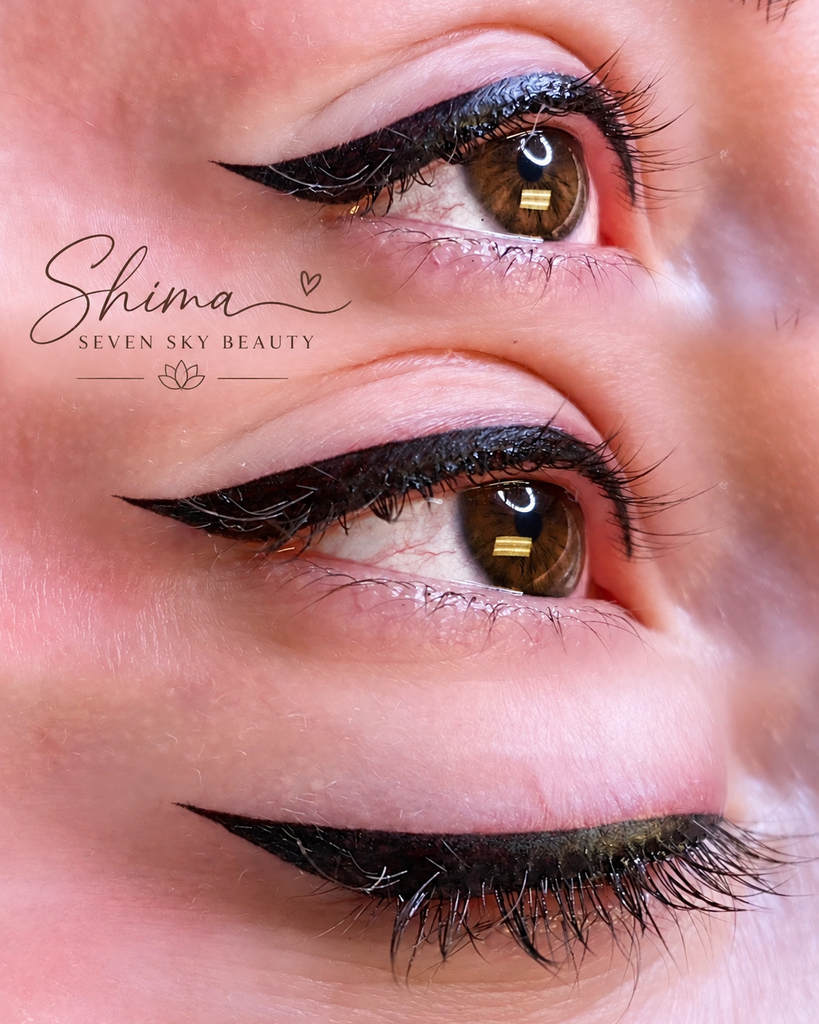
Permanent eyeliner before and after showing a defined healed eye line

Classic eyeliner – Eyebrows microblading, lip blush, eyeliner, in montreal

Lashline Enhancement – Eyebrows microblading, lip blush, eyeliner, in montreal

Classic Eyeliner in Montreal: Flawless, Symmetrical Wings – Eyebrows microblading, lip blush, eyeliner, in montreal

Shaded Eyeliner in Montreal: Anti-Aging secret – Eyebrows microblading, lip blush, eyeliner, in montreal

If you are considering Microblading for mature skin, you may be wondering whether this technique can still create soft, natural-looking eyebrows as your skin changes with age.

The answer is not simply yes or no.

Age alone does not decide whether Microblading is right for you.

Two clients who are both 60 or 70 can have completely different skin. One may have healthy, relatively firm skin with enough natural brow hair for beautiful Microblading results. Another may have very thin, fragile, textured, sun-damaged or very oily skin where Nano Brows, Powder Brows or another technique may heal more predictably.

The most important question is not:

“Am I too old for Microblading?”

The better question is:

“Is Microblading the right technique for my skin and brows?”

What Changes in Mature Skin?

As skin matures, several changes can happen.

The skin may become:

  • thinner;
  • drier;
  • less elastic;
  • more delicate;
  • more textured;
  • more affected by sun damage.

The position and shape of the brows can also change slightly with age because the soft tissues around the forehead and eyes change over time. Recent research on permanent makeup and aging has highlighted that brow position, eyelid changes and skin thinning can all affect PMU planning. 

This means the artist should not use exactly the same technique, depth, pressure or brow design for every mature client.

Can Microblading Work on Mature Skin?

Yes, Microblading can work beautifully on some mature clients.

It may be a good option when the client has:

  • normal to dry skin;
  • enough natural brow hair;
  • relatively healthy skin in the brow area;
  • realistic expectations;
  • no heavy old permanent makeup;
  • a preference for fine, natural hair strokes.

However, Microblading may not be the best choice for every mature client.

Some studios recommend Nano Brows or Powder Brows more often for thin, crepey, textured or sun-damaged skin because fine manual strokes can sometimes heal less crisply on those skin types. 

Age Is Not the Same as Skin Type

This is one of the most important things to understand.

Being 60, 65 or 70 does not automatically mean your skin is unsuitable for Microblading.

Some clients in their 60s have healthier brow-area skin than younger clients with very oily, textured or sun-damaged skin.

This is why an individual skin assessment is more useful than making a decision based only on age.

The artist should evaluate:

  • skin thickness;
  • oiliness;
  • texture;
  • elasticity;
  • sun damage;
  • existing brow hair;
  • old pigment;
  • the desired result.

Why Natural Brow Hair Matters More on Mature Skin

Microblading usually looks most natural when the new strokes can blend with existing brow hair.

If a mature client still has a good amount of natural brow hair, carefully placed strokes can fill small gaps and improve the shape without creating an overly strong result.

If there is very little natural brow hair, the artist has to create much more of the brow with pigment.

In that situation, the technique and pattern become even more important.

Some experienced PMU artists prefer Powder, Nano or Combination Brows when there is very little natural hair because these techniques can sometimes create a more balanced healed result than isolated Microblading strokes. 

Brow Mapping Is Especially Important for Mature Clients

A common mistake is trying to recreate exactly the same eyebrow shape a client had 20 or 30 years ago.

But the face changes over time.

The brow bone, eyelid area and soft tissues around the eyes may change slightly.

That means a shape that looked perfect years ago may not be the most flattering shape today.

A good Brow Mapping process should consider:

  • current facial proportions;
  • natural brow position;
  • natural asymmetry;
  • eyelid shape;
  • existing brow hair;
  • the direction of hair growth;
  • the client’s preferred style.

The goal is not to make the face look “younger.”

The goal is to create brows that look balanced, soft and natural on the face you have today.

Microblading Should Not Look Too Dark on Mature Skin

For many mature clients, softer is better.

A very dark, heavy or highly defined brow can sometimes overpower the face.

A more natural result often comes from:

  • softer pigment choices;
  • realistic hair-stroke direction;
  • careful spacing;
  • avoiding an overly thick brow;
  • avoiding a very sharp front.

The goal should be to support the natural features, not dominate them.

When Microblading May Not Be the Best Choice

Microblading may not be ideal if the brow area has:

  • very thin or fragile skin;
  • significant sun damage;
  • very large pores;
  • very oily skin;
  • heavy texture;
  • scar tissue;
  • dark or saturated old PMU;
  • very little clean skin space for clear strokes.

In these cases, another eyebrow technique may heal more predictably.

Nano Brows for Mature Skin

Nano Brows use a PMU machine and a fine needle to create hair-like strokes.

For some mature clients, this can be a good alternative to traditional Microblading.

The machine allows the artist to build strokes with controlled needle movement rather than using a manual blade.

Some studios specifically prefer Nano Brows for mature skin because they believe the machine technique can offer more control on thinner or more delicate skin. 

But Nano Brows are not automatically perfect for every mature client either.

The skin still needs to be suitable for healed hair strokes.

Powder Brows for Mature Skin

Powder Brows create a soft shaded effect instead of individual hair strokes.

For some mature clients, this can be an excellent option.

Powder Brows may be useful when:

  • the skin is too textured for very fine strokes;
  • there is very little natural brow hair;
  • the client wants more overall definition;
  • the client already fills in the brows with pencil or powder;
  • old PMU needs to be refreshed or visually softened.

Several PMU studios specifically recommend soft shading for mature or sensitive skin because it can provide a more predictable healed result in some cases. 

Microblading vs Nano vs Powder Brows for Mature Skin

There is no single technique that is best for every mature client.

Microblading may be best when:

  • the skin is normal to dry;
  • there is enough natural brow hair;
  • the client wants a very natural hair-stroke look;
  • the skin can support clean healed strokes.

Nano Brows may be best when:

  • the client wants machine-created hair strokes;
  • the artist believes the skin can support fine machine strokes;
  • a machine technique gives better control for that skin.

Powder Brows may be best when:

  • the skin is more textured;
  • the client has very little natural brow hair;
  • the client wants more definition;
  • soft shading is likely to heal more evenly.

The best choice should come from the skin assessment, not from a trend.

What If You Already Have Old Microblading or PMU?

This is especially important for mature clients who may have had eyebrow permanent makeup years ago.

Old pigment can change:

  • color;
  • shape;
  • saturation;
  • visibility.

If the old pigment is still dark or outside the desired new shape, adding new Microblading strokes may not give a clean result.

Sometimes correction, fading or removal may need to be discussed first.

Always tell your artist about previous permanent makeup before booking.

What About Very Thin or Delicate Skin?

Thin skin needs careful technique.

Too much pressure or working too aggressively can cause poor healing, blurred pigment or unnecessary trauma.

The artist needs to adjust:

  • pressure;
  • depth;
  • stroke length;
  • spacing;
  • pigment choice;
  • number of passes.

This is one reason experience with different skin types matters.

A technique that works beautifully on younger, thicker skin may need to be modified on more delicate mature skin.

Healing on Mature Skin

Healing can vary from person to person.

Fresh Microblading usually looks darker and more defined.

During healing, the brows may:

  • look darker at first;
  • feel slightly dry or sensitive;
  • begin to flake;
  • look lighter for a period;
  • become softer as the skin heals.

Mature skin may sometimes heal more slowly or respond differently, especially if the skin is thin or sensitive.

The final result should not be judged on the first day.

When Is the Microblading Touch-Up?

At Seven Sky Beauty, the first Microblading touch-up can be performed from four weeks after the initial appointment.

At that time, the healed result can be evaluated.

During the touch-up, we can check:

  • pigment retention;
  • lighter areas;
  • stroke definition;
  • shape;
  • density;
  • small details that may need adjustment.

After that, I generally recommend an annual touch-up once a year to refresh the color and maintain the result.

Can Microblading Make Mature Brows Look More Balanced?

Yes, when the design is appropriate.

As brows become thinner or lighter, the face can sometimes lose some definition around the eyes.

A carefully designed brow can:

  • add structure;
  • fill sparse areas;
  • improve visual balance;
  • frame the eyes;
  • reduce the need for daily eyebrow pencil.

But Microblading cannot change bone structure, eyelid position or natural facial asymmetry.

It should improve the brows, not promise to change the face.

What Mature Clients Should Ask Before Booking

Before booking, ask your artist:

  • Have you worked on mature skin before?
  • Can I see healed results on clients in my age group?
  • Is Microblading really the best technique for my skin?
  • Would Nano or Powder Brows be better?
  • What happens if I already have old PMU?
  • What should I expect during healing?
  • When is my touch-up?
  • How often will I need maintenance?

One useful point that several competitor pages do mention—and that is worth keeping—is to ask for healed results, not only fresh photos. Fresh work can look impressive, but the healed result shows how the technique actually settled into the skin. 

What Microblading Cannot Do for Mature Skin

This is something that many promotional pages do not explain clearly enough.

Microblading cannot:

  • make both sides of the face perfectly identical;
  • completely change the structure of the face;
  • guarantee identical pigment retention everywhere;
  • stay unchanged forever;
  • guarantee that every mature skin type will heal with crisp strokes.

Realistic expectations are part of a good permanent makeup result.

Is Microblading for Mature Skin Safe?

When performed by a trained professional using appropriate hygiene and technique, permanent makeup can be performed on many mature clients.

However, skin condition and medical history still matter.

Clients should always tell their artist about relevant medications, skin conditions, recent procedures or other factors that may affect healing.

If there is a medical concern, the safest approach is to discuss it with the appropriate healthcare professional before treatment.

Frequently Asked Questions About Microblading for Mature Skin

Am I too old for Microblading?

There is no single age limit that determines whether Microblading is suitable. The condition of your skin and brows matters more than your age alone.

Is Microblading good for women over 60?

It can be, if the skin is suitable and the artist believes hair strokes will heal well.

Is Nano better than Microblading for mature skin?

Sometimes, but not always. Nano Brows may be a better choice for some clients, while Microblading can still work beautifully on others.

Are Powder Brows better for mature skin?

For some clients with thinner, textured or very sparse brows, Powder Brows may provide a softer and more predictable result.

Can Microblading look natural on older women?

Yes. Good results should look soft, balanced and appropriate for the client’s face and natural brow hair.

What if I have very little brow hair?

Microblading may still be possible, but Nano, Powder or Combination Brows may sometimes create a better overall result.

When can I have my touch-up?

At Seven Sky Beauty, the first Microblading touch-up can be performed from four weeks after the initial appointment.

So, Is Microblading a Good Choice for Mature Skin?

It can be.

But the best treatment should not be chosen based only on age or on the name of the technique.

The most important factors are:

  • your skin condition;
  • your natural brow hair;
  • your previous permanent makeup;
  • your facial features;
  • your expectations;
  • the healed result you want.

At Seven Sky Beauty, each client is evaluated individually.

If Microblading is suitable for your skin, the brow shape and hair-stroke pattern can be customized to your natural features.

If another technique is more appropriate, we can discuss Nano Brows, Powder Brows or another option.

Considering Microblading for mature skin? Book a consultation at Seven Sky Beauty to find the eyebrow technique that best suits your skin and desired result.

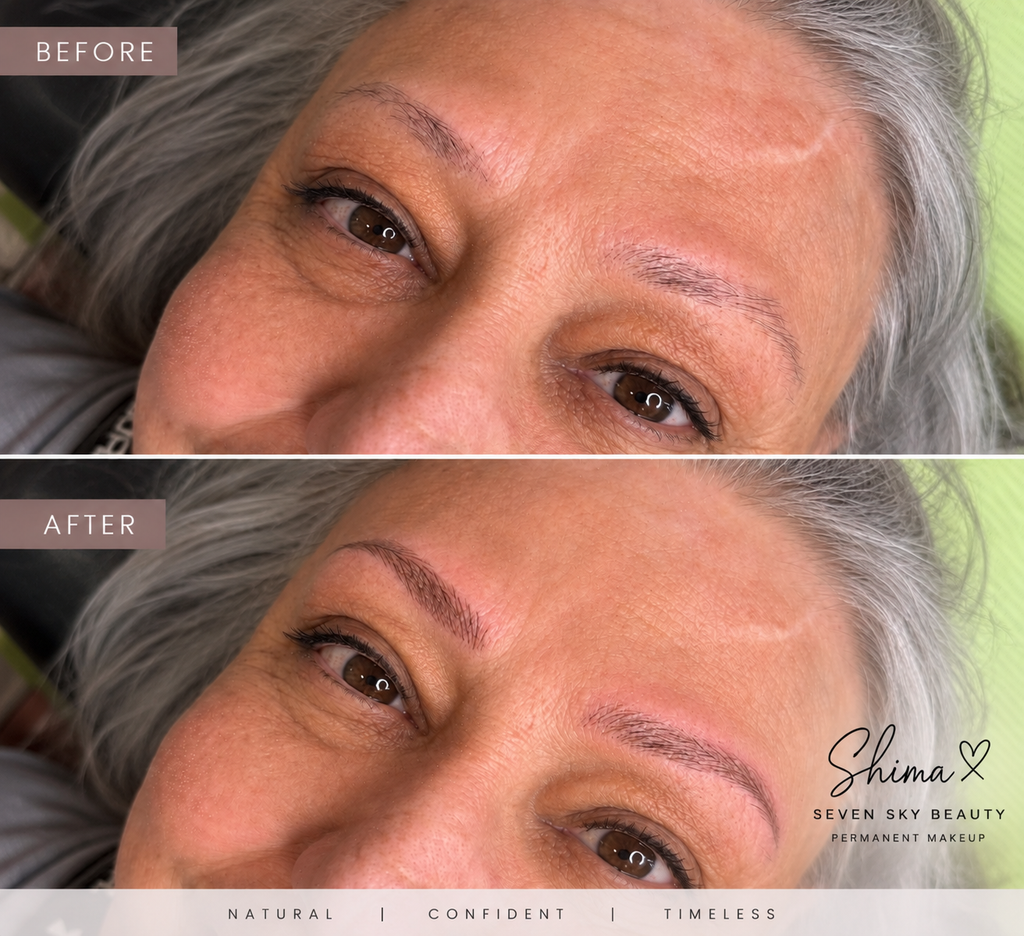
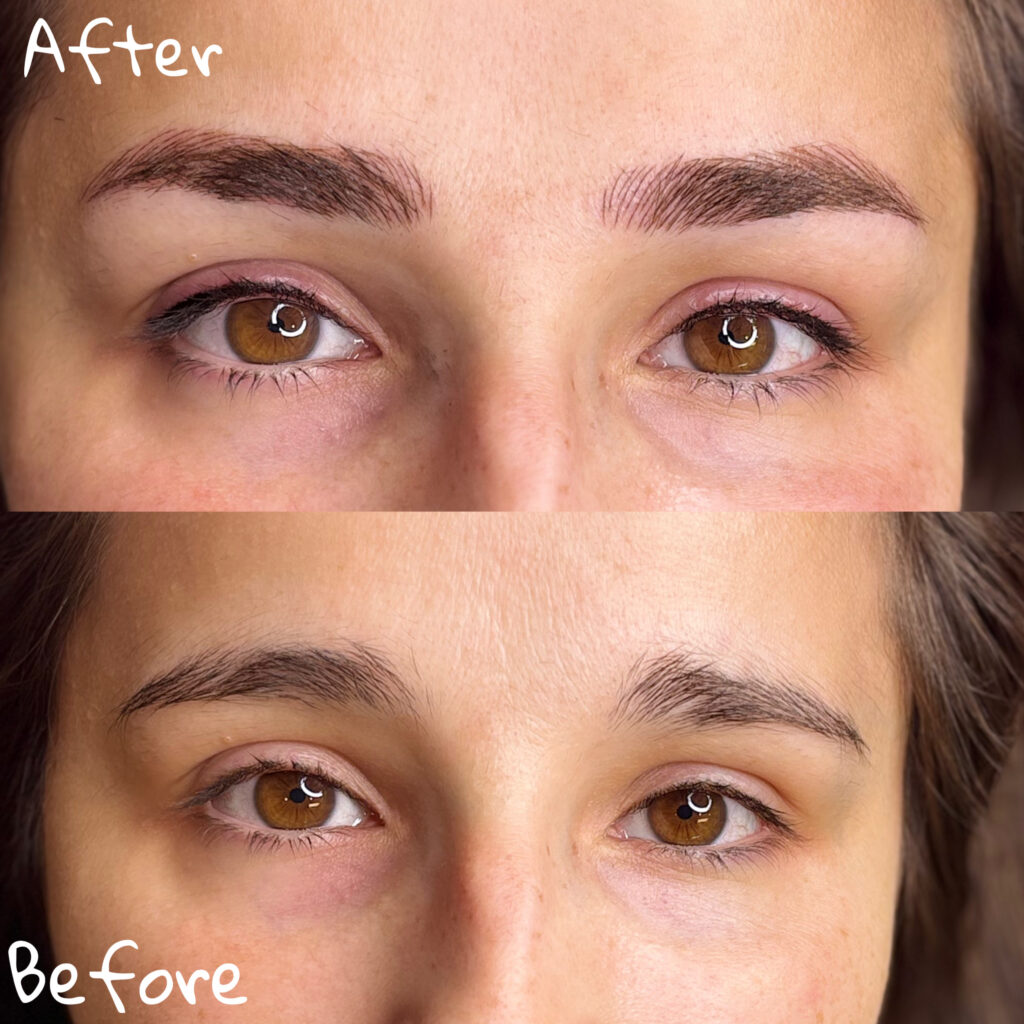
Microblading for mature skin before and after with natural-looking brows

Microblading – Eyebrows microblading, lip blush, eyeliner, in montreal

Nanoblading Eyebrows – Eyebrows microblading, lip blush, eyeliner, in montreal

Nano Brows vs Microblading: Which Technique Is Right for You? – Eyebrows microblading, lip blush, eyeliner, in montreal

Microblading Healing Process: What to Expect Day by Day – Eyebrows microblading, lip blush, eyeliner, in montreal

How Long Does Microblading Last? – Eyebrows microblading, lip blush, eyeliner, in montreal
Permanent Makeup for Mature Skin – Eyebrows microblading, lip blush, eyeliner, in montreal

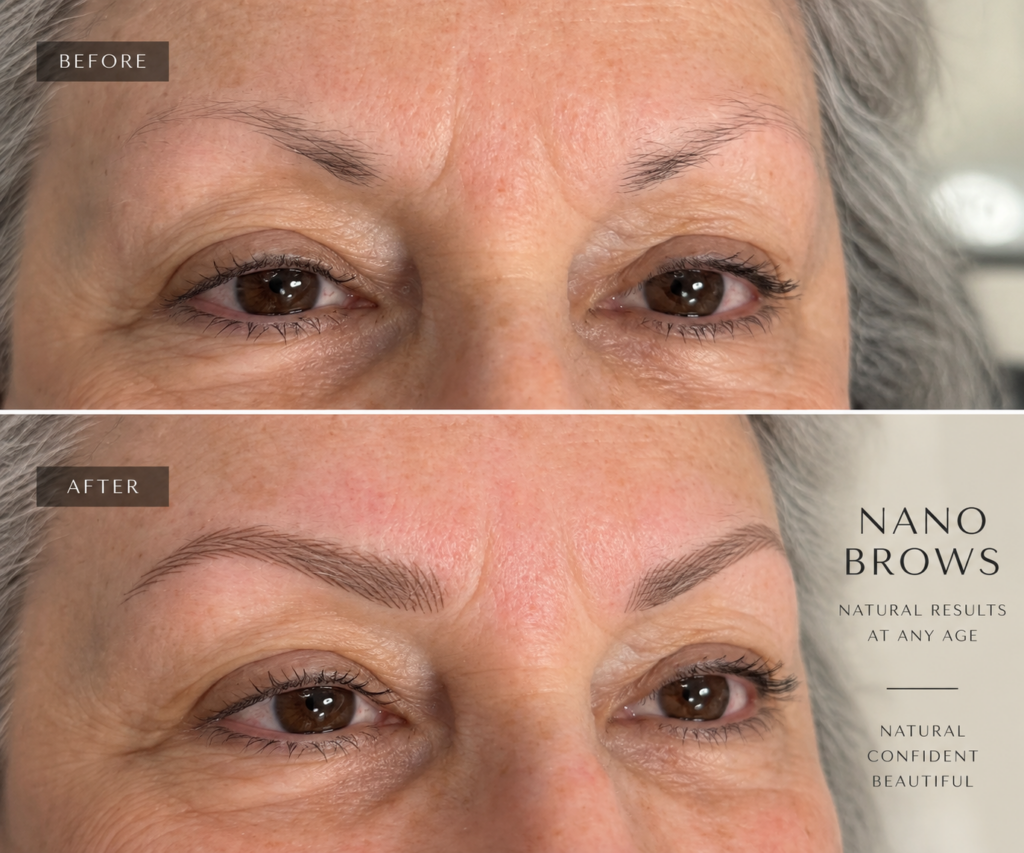
If you love natural-looking eyebrows but want a technique that creates fine hair strokes with a PMU machine, Nano Brows may be a good option.

Nano Brows are created with a permanent makeup machine and a very fine needle. Instead of making a manual stroke with a Microblading tool, the artist builds each hair stroke with small, controlled needle movements.

The goal is to create soft, realistic eyebrow hairs that blend with your natural brows.

But Nano Brows are not simply “better Microblading.”

The right technique depends on your skin, natural brow hair, previous permanent makeup and the result you want.

What Are Nano Brows?

Nano Brows are a permanent makeup technique that creates realistic hair-like strokes using a PMU machine and a fine needle cartridge.

The machine moves the needle in and out of the skin repeatedly while the artist creates each stroke.

This is different from Microblading, which uses a manual hand tool.

Both techniques can create natural hair-stroke results, but the way the pigment is placed into the skin is different. 

How Are Nano Brows Created with a Machine?

With Nano Brows, the artist uses a digital permanent makeup machine.

A fine needle enters and exits the skin while the artist slowly builds the shape of each hair stroke.

The artist controls important factors such as:

  • hand movement;
  • machine speed;
  • needle choice;
  • pressure;
  • stroke direction;
  • pigment choice;
  • skin response.

The machine is only one part of the result.

The artist still needs strong knowledge of hair patterns, skin and needle control to create natural-looking healed strokes.

Nano Brows vs Microblading: What Is the Main Difference?

The biggest difference is the tool and the way the stroke is created.

Microblading

Microblading uses a manual hand tool with a fine blade configuration.

The artist creates the hair stroke manually.

Nano Brows

Nano Brows use a PMU machine with a fine needle.

The hair stroke is built with repeated needle movements.

Both can look very natural when performed correctly.

Neither technique is automatically the best choice for every client. 

What Are the Benefits of Nano Brows?

1. Very Natural Hair-Stroke Results

Nano Brows can create thin, soft strokes that look similar to natural eyebrow hairs.

When the stroke pattern follows the client’s own hair direction, the result can blend beautifully with the natural brow.

2. More Control with a Machine

Using a PMU machine allows the artist to adjust the machine, needle and movement according to the skin and the design.

But good machine work still requires skill and experience.

The machine does not automatically create a better result.

3. Customized Stroke Patterns

Nano Brows should not follow one standard pattern for every client.

The artist should consider:

  • the natural direction of the brow hair;
  • brow density;
  • gaps;
  • facial features;
  • skin type;
  • desired fullness.

The goal is to build a pattern that looks like it belongs to your natural brows.

4. Another Hair-Stroke Option

Some clients want a hair-stroke result but may not be the ideal candidate for traditional Microblading.

Nano Brows can give the artist another option to consider.

However, very oily or highly textured skin can still be difficult for fine hair strokes, even when a machine is used. 

Are Nano Brows Good for Oily Skin?

This is one of the most common questions about Nano Brows.

You may see claims online that Nano Brows are always better for oily skin.

The reality is more individual.

Some clients with slightly oily or combination skin may get good machine hair-stroke results.

But very oily skin, large pores or highly textured skin can still make fine strokes heal softer or less defined.

In these cases, Powder Brows or Combo Brows may sometimes be a better option.

The skin should be evaluated before choosing the technique. 

Who Is a Good Candidate for Nano Brows?

Nano Brows may be suitable for someone who:

  • wants natural-looking hair strokes;
  • has sparse areas in the brows;
  • wants to improve eyebrow shape;
  • prefers a soft result rather than a strong makeup effect;
  • wants a machine-based hair-stroke technique;
  • has skin that can support clear healed strokes;
  • understands that permanent makeup still needs maintenance.

A consultation is important because skin condition matters as much as the style you want.

Who May Need Another Technique?

Nano Brows may not be the best choice if:

  • the skin is extremely oily;
  • the brow area has very large pores;
  • there is heavy old permanent makeup;
  • the skin has significant texture or scar tissue;
  • the client wants a strong shaded or makeup-style brow;
  • there is not enough clean skin space for visible hair strokes.

In these situations, Powder Brows, Combo Brows, correction or removal may need to be discussed first. 

Can Nano Brows Be Done Over Old Permanent Makeup?

Not always.

This is an important point that many simple Nano Brow articles do not explain clearly.

If you already have old Microblading, Powder Brows or another eyebrow tattoo, the existing pigment must be evaluated first.

Fine Nano hair strokes need enough contrast against the skin to remain visible.

If the old pigment is too dark, saturated or outside the desired new shape, adding more strokes may not give a clean result.

Sometimes correction or removal may need to be considered before new Nano Brows.

Are Nano Brows Good for Sparse Eyebrows?

Yes, Nano Brows can help create the appearance of more hair in sparse areas.

But very sparse brows require careful planning.

When there are fewer natural hairs, every new stroke is more visible.

The artist needs to understand:

  • stroke direction;
  • spacing;
  • density;
  • how to connect the front, body and tail of the brow;
  • how the strokes may look after healing.

A natural result depends more on the pattern than simply making many strokes.

Do Nano Brows Look Natural After Healing?

They can look very natural when the skin, design and technique are suitable.

Fresh Nano Brows are usually darker and more defined.

During healing, the color becomes softer.

The final result should be judged after the initial healing period, not on the first day.

Just like Microblading, the appearance can change during healing.

What Is the Nano Brows Healing Process Like?

After Nano Brows, the brow area may look darker at first.

Some clients may experience mild redness or sensitivity.

Over the following days, the skin may become dry or lightly flake.

It is important not to scratch, peel or pick the area.

The pigment may look lighter during part of the healing process before the result becomes easier to evaluate.

Always follow the specific aftercare instructions provided by your artist.

Do Nano Brows Need a Touch-Up?

Most permanent makeup treatments may need a perfecting or touch-up session after the initial healing period.

The reason is simple: not every stroke or area necessarily retains pigment in exactly the same way.

A touch-up allows the artist to evaluate the healed work and make appropriate adjustments.

The timing of the touch-up should follow the artist’s protocol and the condition of the skin.

How Long Do Nano Brows Last?

Nano Brows gradually fade over time.

There is no exact number that applies to everyone.

Longevity can depend on:

  • skin type;
  • pigment retention;
  • sun exposure;
  • skincare routine;
  • lifestyle;
  • aftercare;
  • artist technique.

Some sites give fixed timelines, but long-term retention varies from person to person. 

Do Nano Brows Cause Less Skin Trauma Than Microblading?

You may see this claim often online.

Because Nano Brows use a machine needle rather than a manual blade, the way the skin is worked is different.

However, it is too simple to say that one technique is always “gentler” or always causes less trauma.

The result depends on the artist’s technique, depth, pressure, needle choice and skin condition.

No permanent makeup technique is completely without skin trauma. 

Nano Brows Are Not Just About Using a Smaller Needle

This is another important point.

Good Nano Brows require more than simply choosing a very small needle.

The artist must understand:

  • machine control;
  • correct hand speed;
  • skin stretching;
  • needle angle;
  • pigment implantation;
  • realistic hair direction;
  • spacing between strokes.

This is why machine hairstroke training and practice matter.

A beautiful fresh photo is not enough.

The healed result is what matters most.

Nano Brows vs Powder Brows

Nano Brows create individual hair-like strokes.

Powder Brows create a soft shaded effect.

If you want a very natural hair-stroke look, Nano Brows may be appropriate.

If your skin does not hold individual strokes well, or you prefer more definition, Powder Brows may be a better option.

Some clients may also benefit from a combination of strokes and shading.

Nano Brows vs Microblading: Which One Should You Choose?

There is no universal winner.

Microblading may work beautifully for a client with suitable skin who wants manual hair strokes.

Nano Brows may be a good option for a client who wants machine-created hair strokes.

For very oily or textured skin, a shaded technique may sometimes be more predictable than either one.

The best choice starts with the skin, not with a trend. 

What Should You Ask Before Booking Nano Brows?

Before booking, ask:

  • Does the artist have healed Nano Brow results?
  • Does the artist work with machine hair strokes regularly?
  • Is my skin suitable for this technique?
  • What happens if I already have old pigment?
  • What result can I realistically expect?
  • What aftercare will I need?
  • Will I need a touch-up?

These questions can help you make a better decision before the procedure.

Frequently Asked Questions About Nano Brows

Are Nano Brows the same as Microblading?

No. Both can create hair strokes, but Nano Brows use a PMU machine and fine needle, while Microblading uses a manual tool.

Are Nano Brows good for everyone?

No. Skin type, skin texture, previous pigment and the desired result should all be considered first.

Are Nano Brows always better for oily skin?

No. Some clients with slightly oily skin may do well, but very oily or porous skin can still be difficult for fine hair strokes.

Can Nano Brows cover old Microblading?

Sometimes, but not always. The existing pigment must be evaluated first.

Are Nano Brows natural-looking?

Yes, when the design and healed strokes suit the client’s natural hair pattern.

Is the artist’s experience important for Nano Brows?

Very important. Machine hairstrokes require control of the machine, needle and stroke pattern as well as knowledge of skin.

Are Nano Brows Right for You?

Nano Brows can be a beautiful option for clients who want realistic hair strokes created with a PMU machine.

But the technique should be chosen according to your skin, natural brow hair, previous permanent makeup and desired result.

At Seven Sky Beauty, every eyebrow treatment should begin with an individual assessment.

If Nano Brows are suitable for you, the stroke pattern can be customized to your natural brows and facial features.

If another technique is more appropriate, we can discuss Microblading, Powder Brows or another option.

Interested in Nano Brows? Book a consultation at Seven Sky Beauty to find the eyebrow technique that best suits your skin and desired result.

Nano Brows with machine before and after showing natural hair strokes

If you are thinking about getting your eyebrows done, you may be asking yourself:

Is Microblading worth it?

For many people, Microblading can save time, improve sparse or uneven eyebrows, and create a natural hair-stroke effect that does not need to be drawn every morning.

But Microblading is not the perfect choice for everyone.

Your skin type, natural brow hair, lifestyle, expectations, previous permanent makeup and willingness to maintain the result can all affect whether Microblading is a good investment for you.

In this guide, we will look at the real advantages and disadvantages of Microblading, who it works best for, who may need another technique, and what you should know before booking.

What Is Microblading?

Microblading is a semi-permanent eyebrow technique that creates fine strokes designed to look like natural eyebrow hairs.

Instead of filling the entire brow with solid color, the artist places individual hair-like strokes into the skin.

The goal is to improve the shape, fill sparse areas and create a fuller eyebrow while still keeping a natural appearance.

Microblading is especially popular with clients who want realistic-looking brows rather than a makeup-style result.

Is Microblading Worth It?

For the right client, Microblading can absolutely be worth considering.

It can reduce the time spent drawing eyebrows every day and can help people who have sparse, uneven or over-plucked brows.

But the important words are for the right client.

Microblading should not be chosen only because the photos look beautiful on Instagram.

The best results happen when the technique matches the client’s skin, natural brow pattern and expectations.

The Main Benefits of Microblading

1. It Can Look Very Natural

One of the biggest advantages of Microblading is the natural hair-stroke effect.

When the strokes are designed correctly, they can blend with the client’s existing eyebrow hair.

The goal is not to create a block of color.

The goal is to create the appearance of natural hair where the brows need more fullness.

2. It Can Help Sparse Eyebrows

Microblading can be a very useful option for people with gaps or thin areas in their eyebrows.

Instead of using pencil every morning, fine strokes can be added to create the appearance of more hair.

This can be especially helpful for clients who have over-plucked their brows in the past.

3. It Can Improve Uneven Brows

Most faces have some natural asymmetry.

One eyebrow may be slightly higher, shorter or fuller than the other.

Microblading cannot change the bone or muscle structure of the face, but careful Brow Mapping can improve visual balance and create a more harmonious shape.

4. It Can Save Time Every Morning

For clients who fill in their brows every day, Microblading can make the morning routine much easier.

You may still choose to add makeup sometimes, but many clients enjoy waking up with a defined brow shape already in place.

5. The Result Is Customized

A good Microblading treatment should never look exactly the same on every client.

The artist should consider:

  • natural hair direction;
  • eyebrow density;
  • facial features;
  • skin type;
  • natural asymmetry;
  • personal preference.

The stroke pattern should be created specifically for your face.

What Are the Disadvantages of Microblading?

A good article should also talk about the limitations.

1. Microblading Requires Healing

The result does not look final immediately after the appointment.

Fresh Microblading usually looks darker and sharper.

During healing, the brows can flake, peel and temporarily look lighter.

The final result becomes easier to evaluate after the initial healing period.

If you have an important event immediately after your appointment, you should consider the healing time when choosing your appointment date.

2. A Touch-Up Is Part of the Process

Microblading is usually not a one-appointment-and-forget-it treatment.

At Seven Sky Beauty, the initial touch-up can be performed from four weeks after the first appointment.

This allows the healed result to be evaluated and any lighter areas to be refined.

After that, I generally recommend an annual touch-up once a year to refresh the color and maintain the brows.

3. It Does Not Last Forever

Microblading gradually fades. You can also read our full guide about how long Microblading lasts.

For many clients, results can remain visible for around one to two years, but this varies from person to person.

Skin type, sun exposure, skincare products and lifestyle can all affect how quickly the pigment fades.

This gradual fading is normal.

4. Microblading Is Not Ideal for Every Skin Type

This is one of the most important points that is often missed in simple promotional articles.

Very oily skin or skin with larger pores may not always hold fine Microblading strokes as crisply as normal or dry skin.

In these cases, Nano Brows, Powder Brows or another technique may sometimes give a better healed result.

A good artist should be willing to recommend another technique when Microblading is not the best choice.

Who Is Microblading Best For?

Microblading may be a good option if you:

  • have sparse eyebrows;
  • have gaps in the brow;
  • want a more defined shape;
  • want a natural hair-stroke effect;
  • spend time filling your brows every day;
  • prefer a soft, realistic result;
  • have normal to dry skin that is suitable for the technique.

It can also be useful for someone who already has brow hair but wants to improve shape and fullness.

Who May Not Be the Best Candidate for Microblading?

This is where our article becomes more useful than a basic “pros and cons” post.

Microblading may not always be the best option if:

  • your skin is very oily;
  • you have large pores in the brow area;
  • you already have dark or saturated permanent makeup;
  • you want a stronger makeup-style brow;
  • your skin has difficulty healing;
  • you cannot follow the aftercare instructions;
  • your expectations are unrealistic.

In some of these situations, another eyebrow technique may be better.

The right decision should be based on an individual assessment.

Microblading Is Not the Same as Choosing a Brow Shape From a Menu

This is something clients sometimes do not realize before booking.

You should not simply choose a brow photo online and expect the exact same eyebrows.

The shape must work with your face.

The artist needs to consider your natural brow bone, existing hair, facial proportions and natural asymmetry.

A beautiful brow on one person may not be the right shape for another.

The goal is to create your best brow, not copy someone else’s.

What If You Already Have Previous Permanent Makeup?

This is another important question that many competitor articles do not explain enough.

If you already have old Microblading, Powder Brows or another type of permanent makeup, tell your artist before booking.

The existing pigment can affect the new design.

If the old color is still very dark or the old shape is very different from the new desired shape, it may not be possible to simply add fresh Microblading on top.

In some cases, correction, fading or removal may need to be discussed first.

Always send clear photos of your existing brows before your appointment.

What If You Have Very Little Natural Brow Hair?

Microblading can still be helpful for very sparse eyebrows, but the design becomes even more important.

When there is little natural hair, the artist cannot simply hide the new strokes between existing hairs.

The pattern must be created carefully so the result still looks believable.

This is one reason why experience with stroke direction and pattern design matters.

What If You Want Very Full or Makeup-Style Brows?

Microblading is best known for its natural hair-stroke effect.

If you want a stronger, more filled-in or makeup-style result, Microblading alone may not give you the look you want.

You may prefer:

  • Powder Brows;
  • Combo Brows;
  • a combination of strokes and shading.

Choosing the right technique depends on both your skin and your preferred style.

How Much Maintenance Does Microblading Need?

This is another question people should think about before deciding if Microblading is worth it.

The first appointment is only the beginning of the process.

At Seven Sky Beauty:

  • the first touch-up can be done from four weeks;
  • after that, I generally recommend a yearly touch-up.

Microblading gradually fades, so maintenance is part of keeping the brows fresh.

If you want completely maintenance-free eyebrows forever, Microblading is probably not realistic.

What Makes Microblading Worth the Investment?

The value of Microblading is not only about how long the pigment lasts.

For many clients, the real value comes from:

  • saving time every morning;
  • having a consistent eyebrow shape;
  • filling sparse areas;
  • reducing the need for eyebrow pencil;
  • feeling more comfortable without makeup;
  • having brows designed specifically for their face.

For someone who spends significant time doing their brows every day, the convenience can be one of the biggest benefits.

What Microblading Cannot Do

This is another section that many promotional pages skip.

Microblading has limits.

It cannot:

  • make the two sides of your face perfectly identical;
  • completely change your facial structure;
  • guarantee identical pigment retention in every part of the brow;
  • remain unchanged forever;
  • guarantee exactly the same healed result on every skin type.
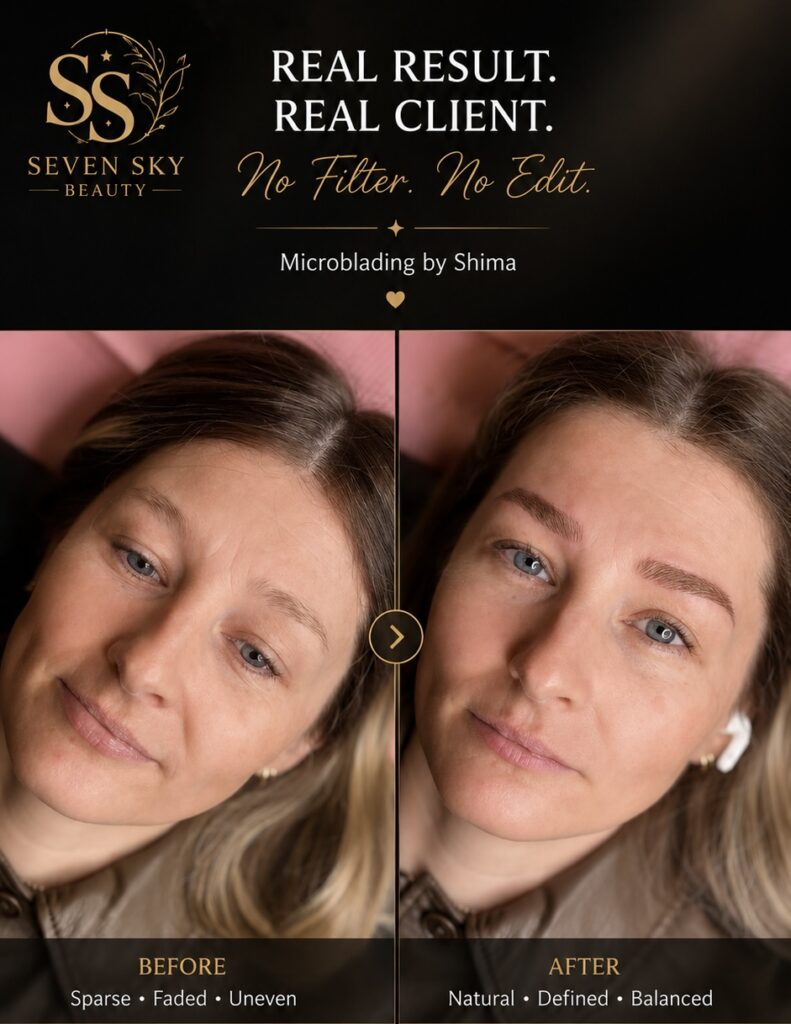
Natural Microblading eyebrow result with realistic hair strokes

Choosing the right Microblading artist is one of the most important decisions you can make before getting your eyebrows done.

Microblading is performed on your face, and the results are designed to last much longer than regular eyebrow makeup. Beautiful results depend not only on the technique, but also on the artist’s experience, design skills, understanding of skin, pigment selection, and attention to detail.

If you are searching for the best Microblading artist, don’t choose based only on price or a few beautiful Instagram photos.

Here are seven important things to look for before booking your appointment.

1. Look at the Artist’s Microblading Experience

Experience matters in Microblading.

An experienced artist has worked with different eyebrow shapes, skin types, facial features, and levels of natural eyebrow hair.

This experience helps the artist understand that the same technique cannot be used in exactly the same way for every client.

A client with naturally full brows may only need a few strokes to improve the shape. Someone with sparse or uneven eyebrows may need a completely different pattern.

When choosing your artist, look at how long they have been working in permanent makeup and whether Microblading is an important part of their work.

2. Check Fresh AND Healed Microblading Results

Fresh Microblading can look beautiful immediately after the appointment, but fresh photos do not tell the whole story.

The healed result is extremely important.

Immediately after Microblading, the strokes usually look darker and sharper. As the skin heals, the pigment becomes softer.

A good portfolio should show consistent work and, when possible, healed results.

When looking at photos, pay attention to:

  • how natural the hair strokes look;
  • whether the strokes follow natural hair growth;
  • the shape of the eyebrows;
  • how the brows fit the client’s face;
  • healed results, not only fresh results;
  • consistency across different clients.

The goal should not be to create the same eyebrows on every person.

3. Make Sure the Artist Understands Brow Mapping

Beautiful Microblading starts before the first stroke is created.

Brow Mapping is the process of designing the eyebrow shape before the treatment begins.

The artist should consider your:

  • facial proportions;
  • natural eyebrow hair;
  • brow bone;
  • eye position;
  • natural asymmetry;
  • preferred style.

Your eyebrows are sisters, not identical twins. Small differences between the two sides of the face are completely normal.

The goal of Brow Mapping is to create better visual balance while keeping the result natural.

You should also have the opportunity to see and approve the shape before the Microblading procedure begins.

4. Choose an Artist Who Understands Different Skin Types

Microblading is not automatically the best eyebrow technique for every person.

Skin type plays an important role in how fine hair strokes heal.

Microblading can produce beautiful, crisp results on many normal and dry skin types. On very oily or porous skin, however, fine strokes may sometimes heal differently.

A professional artist should be able to evaluate your skin and tell you when another technique, such as Nano Brows or Powder Brows, may be more appropriate.

Be careful with an artist who recommends exactly the same technique to every client without first evaluating the skin.

The best treatment is the one that gives you the best healed result — not simply the technique you originally saw online.

5. Check Training, Professional Background and Hygiene

Before choosing a Microblading artist, look at their professional background.

Training and continuing education are important because permanent makeup techniques, pigments, equipment and industry knowledge continue to develop.

You can look for:

  • professional Microblading or PMU training;
  • advanced education;
  • experience in the industry;
  • professional certificates;
  • a clean treatment environment;
  • proper hygiene and safety practices.

Certificates alone do not guarantee beautiful work, but professional education combined with experience and a strong portfolio can help you make a more informed decision.

6. Read Client Reviews

Before booking, take some time to read reviews from previous clients.

Reviews can tell you much more than whether clients simply liked their eyebrows.

Look for comments about:

  • the consultation;
  • professionalism;
  • cleanliness;
  • communication;
  • eyebrow design;
  • natural-looking results;
  • the healing experience;
  • the overall client experience.

A long history of genuine reviews can give you a better picture of what to expect.

7. Don’t Choose Your Microblading Artist Based Only on Price

Price is important, but it should not be the only reason you choose an artist.

Microblading is not like eyebrow makeup that can be removed at the end of the day.

The work is performed on your face and the result can remain visible for a long time.

A lower price does not automatically mean poor work, and a higher price does not automatically guarantee excellent work.

Instead, compare the complete picture:

  • experience;
  • portfolio;
  • healed work;
  • training;
  • reviews;
  • consultation;
  • hygiene;
  • ability to choose the correct technique for your skin.

Choose based on quality and trust, not price alone.

How Do You Know If a Microblading Artist Is Right for You?

After checking the seven points above, there is one more important factor: communication.

You should feel comfortable asking questions.

A professional consultation should give you the opportunity to discuss your expectations, previous permanent makeup, skin type and preferred eyebrow style.

A good artist should also be comfortable telling you when something is not recommended.

For example, if Microblading is not the best technique for your skin, the artist should explain why and recommend a more appropriate option rather than simply performing the service.

Trust is an important part of permanent makeup.

Why Choose Seven Sky Beauty for Microblading?

At Seven Sky Beauty, eyebrow treatments are designed individually for each client.

I have worked professionally in permanent makeup since 2018, with years of experience in Microblading and advanced eyebrow techniques.

Throughout my career, I have continued professional education and have held advanced roles within international permanent makeup academies. My Microblading work has also received professional recognition at WULOP Canada in 2024 and 2025.

But credentials are only one part of choosing an artist.

My priority is to evaluate your skin, natural eyebrow hair, facial features and desired result before deciding on the treatment.

If Microblading is suitable for you, the stroke pattern and eyebrow design are customized to your natural features.

If another technique is more appropriate for your skin, I will explain the alternatives.

The goal is not simply beautiful brows on the day of the appointment.

The goal is a natural, balanced result that heals beautifully.

Best Microblading Artist: What Should You Look for Before Booking?

If you are searching for the best Microblading artist, remember that there is no single photo, certificate or number of followers that tells you everything.

Look at the complete picture.

A strong Microblading artist should combine:

  • experience;
  • natural-looking work;
  • healed results;
  • careful Brow Mapping;
  • knowledge of different skin types;
  • professional training;
  • hygiene;
  • good client communication.

Most importantly, the artist should create eyebrows for your face, rather than giving every client the same shape.

Frequently Asked Questions About Choosing a Microblading Artist

Should I ask to see healed Microblading results?

Yes. Fresh results are useful, but healed results give you additional information about how the artist’s work looks after the skin has recovered.

Should every client get the same Microblading pattern?

No. Hair direction, natural brow shape, facial structure and existing eyebrow hair vary from person to person. The pattern should be customized.

Is the cheapest Microblading artist a bad choice?

Not necessarily. Price alone does not determine quality. Experience, healed work, hygiene, training and the overall portfolio are more useful factors to consider together.

How can I know if Microblading is right for my skin?

A consultation and skin assessment can help determine this. For some skin types, Nano Brows, Powder Brows or another technique may provide a better healed result.

What should I ask during a Microblading consultation?

Ask about the recommended technique, expected healed result, eyebrow design, healing process, aftercare and touch-up.

Ready to Find the Right Microblading Artist?

Choosing a Microblading artist should never feel like choosing from a menu of identical eyebrows.

Your face, skin and natural brow pattern are unique.

At Seven Sky Beauty, we begin by understanding what you want and evaluating which technique is appropriate for your skin.

If you are considering Microblading and want to know whether it is right for you, book a free consultation today.

Microblading artist at Seven Sky Beauty creating natural eyebrows hair strokes

Fresh microblading eyebrows on the first day

If you are considering microblading, you may be wondering what your eyebrows will look like during the healing process. Will they be too dark at first? Will they peel? What happens if the color suddenly looks very light?

Understanding the microblading healing process before your appointment can make the experience much easier and less stressful.

Your brows will change during the first few weeks. These changes are a normal part of the skin’s healing process, and the appearance immediately after your appointment is not the final result.

Here is what you can generally expect.

What Happens During the Microblading Healing Process?

Microblading creates fine, hair-like strokes while pigment is placed into the superficial layers of the skin.

Because the skin has been treated, it needs time to recover. During this period, the color, texture and intensity of the brows can change.

Every person heals differently. Skin type, lifestyle, aftercare and individual pigment retention can all affect the process.

This is why your eyebrows should never be judged only a few days after your appointment.

Day 1 – Your Brows Look Dark and Defined

Immediately after microblading, your eyebrows usually look darker, sharper and more defined than the final healed result.

This is normal.

You may also notice mild redness or sensitivity around the treated area.

At this stage, the individual hair strokes are usually very visible. Some clients love the strong definition immediately, while others may initially feel that their brows look darker than expected.

The color will soften as the skin heals.

What should you do on Day 1?

Follow the aftercare instructions provided by your artist carefully.

Avoid touching your eyebrows unnecessarily and always make sure your hands are clean before caring for the treated area.

Days 2–4 – The Color May Still Look Dark

During the next few days, the eyebrows may continue to look darker than the final result.

The skin has started its natural healing process, and the treated area may feel slightly dry or tight.

Do not panic if the color seems stronger than you expected.

The pigment has not reached its final healed appearance yet.

Days 5–10 – Flaking and Peeling May Begin

This is one of the stages that can worry clients the most.

As the skin continues to heal, you may notice light flaking or peeling around the eyebrows.

This can be completely normal.

Do not pick the flakes

It is very important not to scratch, peel or remove the flakes yourself.

Allow them to come away naturally.

Picking the skin too early may interfere with the healing process and can affect pigment retention.

Even if one area looks uneven during this stage, do not try to correct it with your fingers.

Give your skin time to heal.

Days 10–14 – Why Did My Microblading Disappear?

This is another stage that surprises many first-time clients.

After the flaking stage, the eyebrows can suddenly appear much lighter.

Some clients even think:

“Where did my microblading go?”

Do not judge your final result at this stage.

The skin is still recovering, and the appearance of the pigment can continue to change as the area heals.

The brows usually begin to look more settled over the following weeks.

Weeks 3–4 – Your Healed Result Becomes Clearer

By weeks three and four, the brows usually start to look softer and more natural.

The color is no longer as intense as it was immediately after the procedure, and the healed hair strokes can be evaluated more accurately.

This is also when we can see how your individual skin has retained the pigment.

Some areas may have retained pigment beautifully, while other small areas may appear lighter.

That does not automatically mean something went wrong.

Different areas of the same eyebrow can retain pigment differently.

After 4 Weeks – Your Microblading Touch-Up

At Seven Sky Beauty, the microblading touch-up can be performed from four weeks after the initial appointment, once the initial healing period has passed and the result can be properly evaluated.

During the touch-up appointment, we look carefully at the healed brows.

What happens during the touch-up?

The touch-up may be used to:

● reinforce strokes that healed lighter;

● fill small areas where pigment retention was lower;

● adjust the density if needed;

● refine small details of the shape;

● make appropriate color adjustments based on the healed result.

The purpose is not simply to repeat the first appointment.

The first healed result gives the artist important information about how your skin responds to the pigment. The touch-up allows the work to be refined based on that information.

Because skin heals differently from person to person, some clients may need more refinement than others.

What Is Normal During Microblading Healing?

Several temporary changes can be part of normal healing.

These may include:

● darker brows immediately after treatment;

● mild redness or sensitivity;

● dryness;

● light flaking or peeling;

● temporary unevenness during healing;

● a period when the pigment appears much lighter;

● small areas with less pigment retention.

The most important thing is to give the skin enough time before judging the final result.

What Is Not Part of Normal Healing?

Although some redness and sensitivity can occur after microblading, symptoms that are severe, worsening or unusual should not simply be assumed to be normal healing.

If you develop significant or increasing pain, spreading redness, unusual discharge, marked warmth or other concerning symptoms, seek appropriate medical advice.

Permanent makeup aftercare instructions are important, but they are not a substitute for medical evaluation when there are signs of a possible complication.

How to Protect Your Microblading While It Heals

Good aftercare can have an important effect on how your eyebrows heal.

Follow the instructions given by your artist rather than using random products or advice found online.

In general, you should avoid:

● picking or scratching the treated skin;

● unnecessary touching;

● heavy sweating during the early healing period;

● swimming while the skin is still healing;

● exposing healing brows to excessive sun;

● applying aggressive skincare products directly over the treated area.

Your artist should give you specific instructions based on the treatment performed.

Why Does Microblading Heal Differently on Different People?

Two clients can receive similar microblading treatments and still have different healed results.

Several factors can influence pigment retention, including:

● skin type;

● oil production;

● skin texture;

● aftercare;

● sun exposure;

● skincare products;

● individual healing response.

This is one reason why choosing the correct eyebrow technique for your skin is so important.

Microblading can work beautifully on suitable skin, particularly many normal and dry skin types. For some oily, porous or other skin types, Nano Brows or Powder Brows may be more appropriate.

Does Healed Microblading Look More Natural Than Fresh Microblading?

Yes. Fresh and healed microblading can look quite different.

Immediately after treatment, the strokes are usually darker and more defined.

Once healed, the goal is for those strokes to become softer and blend naturally with your existing eyebrow hair.

This is why healed results are so important when you are choosing a microblading artist.

Do not evaluate an artist only by photographs taken immediately after the procedure. Look for healed work as well.

How Can You Get the Best Healed Microblading Result?

Beautiful healed results are a combination of several factors.

The artist needs to choose the correct technique, pigment and stroke pattern for your skin. The treatment also needs to be performed at an appropriate depth with controlled technique.

The client then has an important role during healing by following the aftercare instructions.

Good permanent makeup is not only about how the eyebrows look when you leave the studio.

The healed result is what really matters.

Why Artist Experience Matters

Microblading is a highly technical treatment.

Creating fine strokes is only one part of the procedure. The artist also needs to understand skin, pigment selection, eyebrow design, facial balance, stroke direction and healed results.

At Seven Sky Beauty, I have worked in permanent makeup since 2018 and have continued to develop my techniques through professional education and years of practical experience.

My Microblading work was also recognized at WULOP Canada in both 2024 and 2025.

For me, however, good microblading is not about creating the same eyebrow on every client. The technique, pattern and design should always be adapted to the individual face and skin.

Frequently Asked Questions About Microblading Healing

Why are my eyebrows so dark after Microblading?

Fresh pigment normally looks stronger than healed pigment. The color should soften as the skin goes through the healing process.

Is peeling after Microblading normal?

Light flaking or peeling can occur during healing. Do not pull or pick at the skin. Allow it to shed naturally.

Why does my Microblading look very light after peeling?

The brows can temporarily appear much lighter during the healing process. It is too early at this stage to judge the final pigment retention.

When can I judge my final Microblading result?

The result becomes much easier to evaluate after the initial healing period, around four weeks. Healing speed can vary between individuals.

When can I have my Microblading touch-up?

At Seven Sky Beauty, touch-ups are performed from four weeks after the initial treatment, once the first healing period has passed and the healed result can be assessed.

Is a Microblading touch-up always necessary?

Pigment retention varies from person to person. A touch-up is commonly used to refine the healed result, reinforce lighter areas and make small adjustments where needed.

Ready for Natural-Looking Microblading?

Understanding the microblading healing process helps you know what to expect before making your decision.

The dark first days, flaking and temporary lightening are all stages that can occur before the softer healed result becomes visible.

At Seven Sky Beauty, each eyebrow treatment is customized according to your skin, natural eyebrow hair and facial features.

If you are considering Microblading but are not sure whether it is the right technique for your skin, book a free consultation and we can determine the best eyebrow technique for you.

Microblading for sparse eyebrows before and after

Sparse or uneven eyebrows can change the balance of the entire face. Some people naturally have thin brows, while others lose eyebrow hair over time because of over-plucking, aging, or changes in hair growth.

If you fill in your brows with a pencil every morning, microblading for sparse eyebrows can be a beautiful way to create more definition while keeping a natural, hair-like appearance.

The goal is not to give everyone the same eyebrow shape. Good microblading should work with your existing brow hair, facial structure, and natural asymmetry to create brows that look like they belong to you.

How Does Microblading Work on Sparse Eyebrows?

Microblading is a manual permanent makeup technique that creates very fine strokes in the skin. These strokes are placed between existing eyebrow hairs to imitate the direction and appearance of natural hair.

For someone with sparse brows, this allows us to visually fill areas where hair is missing without creating a solid or heavily made-up eyebrow.

Microblading can be especially useful for adding definition to:

  • sparse areas at the front of the brows;
  • gaps through the middle of the brow;
  • a weak or undefined arch;
  • short or missing eyebrow tails;
  • areas damaged by years of over-plucking.

The placement of every stroke matters. Hair strokes should follow the natural growth pattern rather than simply filling the eyebrow with identical lines.

Can Microblading Correct Uneven Eyebrows?

Microblading can often make uneven eyebrows look significantly more balanced.

However, there is an important difference between improving symmetry and creating perfectly identical eyebrows.

No human face is completely symmetrical. The position of the eyes, facial muscles, forehead and natural brow bones can be slightly different from one side to the other.

Trying to force two eyebrows into perfectly identical shapes can sometimes make the result look less natural.

Instead, the goal is to create visual balance.

Why Brow Mapping Is So Important

Before microblading begins, the eyebrow shape should be carefully designed.

This process is often called brow mapping.

During the design, several factors are considered:

  • natural eyebrow growth;
  • facial proportions;
  • brow bone structure;
  • position of the eyes;
  • natural arch;
  • existing asymmetry;
  • the client’s preferred style.

The shape is drawn before the procedure begins, so the client can see and approve the proposed design.

This step is especially important when one eyebrow naturally sits higher than the other.

Will Microblading Look Natural on Very Sparse Brows?

Yes, it can — but the technique and design are extremely important.

When there is very little natural eyebrow hair, every stroke becomes more visible. The artist needs to create a believable pattern instead of simply placing parallel lines across the skin.

Natural eyebrow hairs grow in different directions throughout the brow. The strokes at the front usually grow differently from those through the arch and tail.

A well-designed microblading pattern follows these changes.

The finished result should blend with the natural hair rather than look like a tattoo sitting underneath it.

Who Is a Good Candidate for Microblading?

Microblading can work particularly well on normal and dry skin with a healthy skin texture.

It may be a good option if you:

  • have naturally sparse eyebrows;
  • have gaps in your brows;
  • lost hair from previous over-plucking;
  • want more definition without a makeup-like finish;
  • spend time drawing your eyebrows every morning;
  • prefer realistic hair strokes.

Skin type is important, however.

Very oily or highly porous skin may not retain fine microblading strokes as clearly. In those situations, Nano Brows or Powder Brows may sometimes produce a more predictable healed result.

That is why the technique should be selected after evaluating the skin rather than simply choosing from photographs online.

Microblading vs Nano Brows for Sparse Eyebrows

Both techniques can create realistic hair strokes, but they use different tools.

Microblading uses a manual hand tool, while Nano Brows are created with a permanent makeup machine and a fine needle.

Neither technique is automatically better for everyone.

For suitable normal or dry skin, microblading can create extremely crisp and natural-looking strokes. Nano Brows may be more appropriate for some other skin types or situations.

If you’re deciding between the two, you can also read our Nano Brows vs Microblading guide before booking your appointment.

What Happens During a Microblading Appointment?

A professional appointment should involve much more than simply tattooing eyebrow strokes.

1. Consultation and skin assessment

We first discuss your current brows, skin type, previous permanent makeup and the result you would like to achieve.

2. Brow mapping

Your new eyebrow shape is designed according to your face and existing brow hair.

You see the shape before microblading begins.

3. Pigment selection

The pigment is selected according to your natural brow hair, skin characteristics and desired healed result.

4. Creating the hair strokes

Fine strokes are placed carefully throughout the brow to build shape and density while maintaining a natural appearance.

5. Healing

The eyebrows will initially look darker and more defined than the final healed result.

As the skin heals, the appearance becomes softer.

What Does Microblading Look Like After Healing?

Fresh microblading and healed microblading should not be judged in the same way.

Immediately after the procedure, the strokes normally appear darker and sharper.

During healing, you may notice some flaking and temporary changes in color. The brows can also appear lighter at certain stages before the pigment becomes more visible again.

The true result should be evaluated only after the skin has completed its initial healing period.

Following the correct microblading aftercare is important for pigment retention and healthy healing.

Why Is a Touch-Up Sometimes Needed?

Every person’s skin retains pigment differently.

After the first session, some strokes may heal lighter than others. A touch-up allows the artist to evaluate the healed result and perfect areas that need additional pigment.

It can also be used to make small adjustments to the color or density.

The touch-up is therefore part of creating a refined final result rather than simply repeating the first procedure.

Can Microblading Make Your Face Look Younger?

Microblading is not an anti-aging treatment and it cannot physically lift the face.

However, eyebrow shape has a strong visual effect on facial balance.

Restoring a missing tail, improving the arch or adding definition to sparse brows can make the eye area appear more structured and the overall face look fresher.

The key is subtle design. An eyebrow that is too dark, too thick or positioned incorrectly can have the opposite effect.

How Do You Choose a Microblading Artist?

Microblading results depend heavily on the artist’s technical skill.

Before choosing an artist, look beyond one or two fresh before-and-after photographs. Pay attention to:

  • healed results;
  • stroke patterns;
  • eyebrow symmetry and design;
  • experience with different skin types;
  • hygiene standards;
  • professional training;
  • consistent work over time.

Experience is particularly important because every client’s skin and natural eyebrow pattern is different.

At Seven Sky Beauty, I have worked in permanent makeup since 2018 and have continued advanced training throughout my career. My microblading work has also been recognized at WULOP Canada in both 2024 and 2025.

For me, those achievements are not a reason to use the same technique on every client. They reinforce something more important: good eyebrow work requires precision, careful design and a technique selected for the individual person.

Microblading for Sparse Eyebrows: Is It Right for You?

If your eyebrows are sparse, uneven or missing definition, microblading may be an excellent option.

But the best result starts with choosing the correct technique for your skin.

Some clients are ideal candidates for Microblading. Others will achieve better healed results with Nano Brows, Powder Brows or a combination technique.

A professional consultation allows us to examine your brows and skin before making that decision.

Frequently Asked Questions

Can Microblading fill completely empty areas?

It can create the appearance of hair in areas with little or no natural eyebrow hair. The final design needs to blend naturally with the remaining brow.

Can Microblading make two uneven eyebrows identical?

It can improve visual symmetry significantly, but perfectly identical brows are neither realistic nor necessarily desirable because the two sides of the face naturally differ.

Is Microblading suitable for oily skin?

It can be performed in some cases, but fine strokes may heal less clearly on very oily or porous skin. Nano Brows or Powder Brows may be more suitable depending on the individual skin.

Does Microblading look like eyebrow makeup?

Properly performed microblading is designed to imitate individual eyebrow hairs rather than create a solid makeup effect.

How do I know whether Microblading or Nano Brows is better for me?

Your skin type, existing brow hair, previous permanent makeup and desired result all matter. A consultation is the best way to determine the appropriate technique.

Ready to Restore Your Brows?

If you’re tired of filling sparse or uneven eyebrows every morning, a personalized eyebrow treatment can make your daily routine much easier.

At Seven Sky Beauty, your brows are designed around your natural facial features rather than a standard template.

Book a free consultation to find out whether Microblading, Nano Brows or another eyebrow technique is the best choice for you.

Choosing between Nano Brows vs Microblading can feel overwhelming, especially if you’re getting permanent makeup for the first time. Both techniques are designed to create fuller, natural-looking eyebrows, but they are performed differently and may suit different skin types and beauty goals.

Understanding the differences will help you choose the treatment that gives you the most beautiful and long-lasting result.

What Are Nano Brows?

Nano Brows are created using a digital permanent makeup machine with an ultra-fine needle. Individual hair strokes are placed one by one to imitate natural eyebrow hairs.

Because the machine allows precise control, the strokes can be very delicate and customized for each client.

Nano Brows are ideal for clients who want:

  • Natural-looking eyebrows
  • Soft, realistic hair strokes
  • Minimal skin trauma
  • Long-lasting results

What Is Microblading?

Microblading is a manual technique performed with a handheld blade made of tiny needles.

Instead of using a machine, the artist creates hair-like strokes manually by depositing pigment into the skin.

When performed correctly, Microblading creates beautiful, natural eyebrows with crisp hair strokes.

It remains an excellent option for many clients, especially those with:

  • Normal skin
  • Dry skin
  • Fine pores
  • Healthy skin texture

How to Choose Between Nano Brows vs Microblading

FeatureNano BrowsMicroblading
TechniqueDigital machineManual blade
Hair strokesUltra-fineCrisp manual strokes
Skin traumaUsually lessSlightly more
Best forMost skin typesNormal to dry skin
HealingOften smootherDepends on skin type
LongevityExcellentExcellent with proper care

Neither technique is universally better. The right choice depends on your skin, lifestyle, and desired result.

Which Technique Looks More Natural?

Both Nano Brows and Microblading can look incredibly natural when performed by an experienced permanent makeup artist.

Natural results depend much more on:

  • Correct eyebrow design
  • Proper pigment selection
  • Hair stroke direction
  • Skin assessment
  • Artistic experience

A beautifully designed Microblading treatment can look just as natural as Nano Brows.

Which Skin Types Are Best?

Nano Brows

Nano Brows may be a great option for:

  • Combination skin
  • Oily skin
  • Mature skin
  • Sensitive skin
  • Clients wanting very soft strokes

Microblading

Microblading often works beautifully for:

  • Dry skin
  • Normal skin
  • Clients with smaller pores
  • Healthy skin with good elasticity

Every client should have a consultation before deciding which technique is the most appropriate.

Healing Process

Both treatments require proper aftercare.

During healing you may notice:

  • Darker color initially
  • Mild flaking
  • Temporary fading
  • Color returning after healing

The final healed result is usually evaluated about four weeks after the first appointment, followed by a perfecting touch-up if needed.

Which Technique Lasts Longer?

The longevity of both treatments depends on several factors:

  • Skin type
  • Sun exposure
  • Skincare routine
  • Lifestyle
  • Pigment retention
  • Aftercare

Regular annual color boosts help maintain beautiful eyebrows regardless of the technique.

Which Technique Should You Choose?

There is no single answer.

The best treatment depends on:

  • Your skin type
  • Existing eyebrow hair
  • Age
  • Lifestyle
  • Personal preference
  • Desired appearance

A professional consultation allows your artist to evaluate your skin and recommend the technique that will produce the best long-term results.

Frequently Asked Questions

Are Nano Brows less painful than Microblading?

Both treatments are generally well tolerated with topical anesthetic. Individual sensitivity varies.

Can oily skin get Microblading?

Some clients with oily skin may experience less pigment retention. During a consultation, your artist can determine whether Microblading or Nano Brows is the better choice.

Which heals faster?

Healing varies from person to person. Following proper aftercare instructions is the most important factor for beautiful results.

Can I switch from Microblading to Nano Brows?

In many cases, yes. Your artist will first evaluate your existing pigment and skin condition before recommending the next treatment.

Conclusion

Both Nano Brows and Microblading are excellent permanent makeup techniques capable of producing beautiful, natural eyebrows.

Rather than asking which treatment is universally better, the better question is:

Which technique is best for your skin?

Choosing an experienced permanent makeup artist ensures your treatment is customized specifically for your skin, facial features, and long-term goals.

Book Your Free Consultation

Not sure whether Nano Brows or Microblading is right for you?

At Seven Sky Beauty, every eyebrow treatment begins with a personalized consultation to evaluate your skin type, facial features, and desired look.

Book your free consultation today and let us help you choose the perfect eyebrow technique.

Compare Nano Brows vs Microblading to learn the differences, healing, and the best technique for your skin type.