
If you have recently had Microblading, you may be wondering whether the touch-up is really necessary.
The first touch-up is an important part of the Microblading process because your skin does not always retain pigment evenly after the first appointment.
Some strokes may heal lighter, some areas may hold more pigment than others, and small refinements may be needed once the brows are fully healed.
A touch-up is not simply a repeat of the first appointment.
It is the stage where the healed result can be evaluated and careful adjustments can be made only where they are needed.
What Is a Microblading Touch-Up?
A Microblading touch-up is a follow-up appointment after the initial healing period.
During the first appointment, the eyebrow shape and hair-stroke pattern are created. Then the skin goes through the healing process.
As the brows heal, some pigment may soften or fade more in certain areas.
During the touch-up, I evaluate:
- pigment retention;
- lighter areas;
- stroke definition;
- density;
- shape;
- symmetry;
- healed color;
- small details that may need refinement.
The goal is not to start over.
The goal is to improve and complete the healed result.
Why Does Microblading Need a Touch-Up?
Every person’s skin heals differently.
Even clients with similar skin types can retain pigment differently.
A touch-up may be useful if:
- a few strokes healed lighter;
- one area retained less pigment;
- the brow front needs to look softer or more balanced;
- the tail needs slightly more definition;
- the density needs a small adjustment;
- the healed color needs refinement.
A lighter or slightly uneven healed result does not automatically mean that the first appointment was unsuccessful.
The first healed result gives important information about how your skin accepted and retained the pigment.
When Is the First Microblading Touch-Up?
At Seven Sky Beauty, the first Microblading touch-up can be performed from four weeks after the initial appointment.
By this stage, the first healing period has passed and the brows can be evaluated more accurately.
It is important not to judge the final result too early.
During healing, the brows may first look darker, then become lighter, and later settle into a softer healed result.
The touch-up should be planned according to the healed brows, not according to how they looked immediately after the first appointment.
What Happens During the Touch-Up?
During the appointment, I first examine the healed brows carefully.
I check:
- which strokes stayed clearly visible;
- which areas healed lighter;
- whether the density is balanced;
- whether the healed color looks appropriate;
- whether the shape still looks natural;
- whether small refinements are needed.
I then work only on the areas that actually need improvement.
This is important because a touch-up should be based on the healed result rather than automatically repeating the entire first session.
Can the Shape Be Changed at the Touch-Up?
Small adjustments are often possible.
For example, during a touch-up we may be able to:
- add slightly more density;
- extend the tail a little;
- reinforce selected strokes;
- balance small differences;
- refine certain areas.
However, a touch-up is not designed for creating a completely different eyebrow shape.
Larger changes may require a different treatment plan, especially when existing pigment is already visible in the skin.
Can the Color Be Adjusted at the Touch-Up?
Yes, small color adjustments may be possible.
After the first healing period, it becomes easier to see how the pigment actually settled in the skin.
If the healed color appears lighter, warmer or cooler than expected, the pigment choice may be adjusted during the touch-up when appropriate.
This is another reason why the healed result matters.
Fresh Microblading does not always represent the final healed color.
What If My Brows Look Patchy Before the Touch-Up?
Some uneven or lighter-looking areas can happen during healing.
Certain strokes may appear much lighter during different stages of the healing process.
For this reason, it is better to allow the skin to heal fully before deciding what needs to be corrected.
Do not add more pigment too early just because the brows temporarily look lighter.
The healed result should always be evaluated first.
What If One Brow Heals Differently From the Other?
This can happen.
The two sides of the face are not identical, and each side may heal slightly differently.
Factors such as:
- skin texture;
- oil production;
- sleeping position;
- natural brow hair;
- individual healing response;
can affect pigment retention.
The touch-up allows small differences to be evaluated and balanced after both brows have healed.
Is the First Touch-Up the Same as an Annual Touch-Up?
No.
These are two different appointments with different purposes.
First Touch-Up
The first touch-up happens after the initial healing period.
At Seven Sky Beauty, it can be performed from four weeks after the first Microblading appointment.
Its purpose is to evaluate the healed result and refine the original treatment where needed.
Annual Touch-Up
An annual touch-up is a maintenance appointment.
After the initial treatment and first touch-up are complete, I generally recommend evaluating the brows around once a year.
The purpose is to refresh pigment that has gradually faded and maintain the overall shape and definition.
The first touch-up completes the initial treatment.
The annual touch-up maintains the result over time.
Why Do Annual Touch-Ups Matter?
Microblading pigment gradually fades over time.
How quickly it fades can depend on:
- skin type;
- sun exposure;
- skincare products;
- lifestyle;
- pigment retention;
- aftercare.
An annual touch-up may help:
- refresh faded pigment;
- restore definition;
- maintain the brow shape;
- keep the brows looking fresh;
- reduce the need for daily brow makeup.
At Seven Sky Beauty, I generally recommend evaluating the brows around the one-year mark to determine whether a refresh is needed.
Can You Touch Up Microblading Too Often?
Yes.
More pigment is not always better.
If Microblading is refreshed too frequently, pigment can gradually build up in the skin.
Over time, this may cause individual strokes to become less visible or begin to blend together.
Repeated unnecessary work can also place additional stress on the skin.
Before adding more pigment, the existing brows should always be evaluated carefully.
If the pigment is still strong and visible, another touch-up may not yet be necessary.
What If My Old Microblading Is Still Very Dark?
If old pigment is still dark or heavily saturated, adding more Microblading may not be the best choice.
Before proceeding, I evaluate:
- how much pigment is still present;
- the existing color;
- the previous shape;
- whether clean new strokes will still be visible;
- whether another technique may be more suitable.
Sometimes it is better to allow more fading before adding new pigment.
In other cases, correction, Powder Brows or pigment removal may need to be considered.
What If I Wait Too Long for an Annual Touch-Up?
If the pigment has faded significantly, the appointment may require more work than a regular maintenance touch-up.
More of the shape and density may need to be rebuilt.
This is why it can be helpful to evaluate the brows periodically instead of waiting until almost all of the pigment has disappeared.
However, a touch-up should still only be performed when the brows actually need it.
Does Skin Type Affect Touch-Up Needs?
Yes.
Skin type can affect how Microblading pigment heals and fades.
For example:
- oily skin may lose fine stroke definition faster;
- textured skin may make strokes heal softer;
- dry skin can retain pigment differently;
- mature skin may require a more conservative technique;
- sun-damaged skin can affect healed results.
This is why touch-up needs are different from one client to another.
The treatment should always be adapted to the actual condition of the skin.
Do You Need Aftercare Again After the Touch-Up?
Yes.
A touch-up creates another healing period.
The brows should be cared for according to the aftercare instructions provided after the appointment.
Just like after the first session, the brows may initially appear darker and then become softer as they heal.
The final result should not be judged immediately after the touch-up.
What Should You Avoid Before Your Touch-Up?
Before your appointment, avoid anything that can leave the brow area irritated or damaged.
If the skin is sunburned, inflamed, injured or irritated, the treatment may need to be postponed.
You should also tell your artist if:
- you recently started new skincare products;
- you had a recent skin treatment;
- you have irritation in the brow area;
- you have any new medical concerns that may affect the procedure or healing.
Healthy skin is important for predictable healing.
What Should You Bring to Your Touch-Up?
You normally do not need to bring anything special.
If you have clear photos showing how your brows changed during healing, they can sometimes be useful.
The most important thing is to arrive with clean skin and without brow makeup.
Frequently Asked Questions About Microblading Touch-Ups
Is a Microblading touch-up really necessary?
In most cases, the first touch-up is an important part of completing the Microblading process.
It allows the healed result to be evaluated and lighter or uneven areas to be refined when necessary.
When can I get my first touch-up?
At Seven Sky Beauty, the first Microblading touch-up can be performed from four weeks after the first appointment.
What if my brows look too light before the touch-up?
The brows can appear lighter during different stages of healing.
It is better to wait until the skin has healed before deciding whether additional pigment is needed.
Can I make my brows slightly fuller at the touch-up?
Small adjustments to density or shape may be possible, depending on the healed result and the existing pigment.
Is an annual touch-up necessary?
Not every client fades at exactly the same rate.
I generally recommend evaluating the brows around once a year and refreshing them when the pigment and definition have faded enough to need maintenance.
Can too many touch-ups affect the result?
Yes.
Refreshing the brows too often can lead to pigment build-up and make individual hair strokes less defined.
What if I have old Microblading from another artist?
The existing pigment should be evaluated before adding new strokes.
If the pigment is too dark, saturated or outside the desired shape, another approach may be more appropriate.
Why the Touch-Up Is Part of a Good Microblading Result
A successful Microblading result is not only about what the brows look like immediately after the first appointment.
The healing process shows how your skin responds to the pigment and how well the strokes are retained.
The touch-up gives me the opportunity to evaluate the healed result and make careful adjustments only where they are needed.
At Seven Sky Beauty, I do not automatically repeat the full first session.
I evaluate the brows individually and refine only the areas that require additional work.
After the initial treatment and first touch-up are complete, I generally recommend evaluating the brows around once a year for maintenance.
Considering Microblading or due for a touch-up? Book a consultation at Seven Sky Beauty to have your brows evaluated and determine the right next step for your brows.
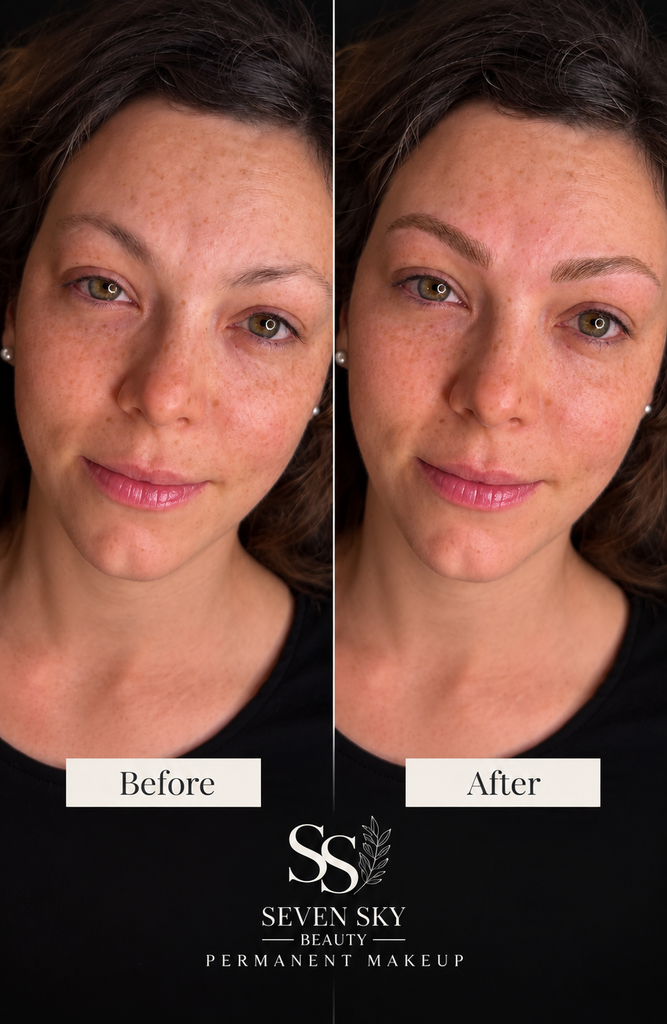
Microblading – Eyebrows microblading, lip blush, eyeliner, in montreal
Microblading for Mature Skin: Is It a Good Choice?
How Long Does Microblading Last? – Eyebrows microblading, lip blush, eyeliner, in montreal